Chhindwara– In a chilling escalation of the toxic cough syrup scandal that has gripped Madhya Pradesh, authorities arrested three senior Sresan Pharmaceuticals officials on Wednesday, intensifying the crackdown on a deadly supply chain blamed for at least 24 child deaths and severe illnesses across the state. The arrests come amid fresh revelations from the Special Investigation Team (SIT), which has uncovered a web of negligence and evasion at the Tamil Nadu-based firm’s factory, where contaminated Coldrif syrup—laced with over 45% diethylene glycol (DEG), a lethal industrial solvent—was produced.
The latest detainees include K. Maheshweri (26), the factory’s quality control manager for oral liquids, nabbed from Kancheepuram after fleeing to Tamil Nadu; Saurabh Jain, a Chhindwara-based wholesale distributor; and Rajesh Soni, a local pharmacist accused of hoarding and concealing residual stocks of the fatal batch. Maheshweri, who oversaw formulation and testing, was slapped with an arrest warrant last week following forensic evidence linking her to the approval of Batch SR-13—manufactured in May and distributed nationwide despite glaring red flags in raw material sourcing. “She greenlit a poison disguised as medicine; her oversight failures directly fueled this tragedy,” Chhindwara SP Ajay Pandey told reporters, confirming the trio’s remand to judicial custody until October 23 for deeper interrogation.
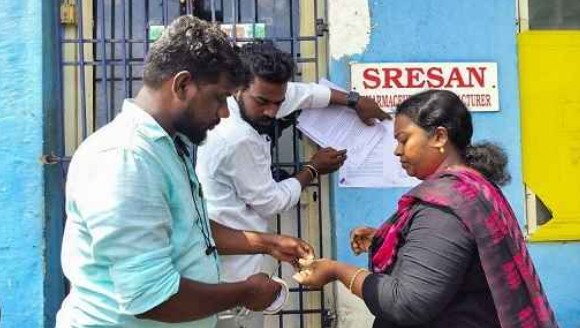
This brings the total arrests to seven, including Sresan owner G. Ranganathan (75), the Madras Medical College alumnus and pharma veteran who was hauled from his Chennai residence in a midnight SIT raid on October 9. Ranganathan, remanded to 10-day police custody last Friday, was escorted back to the firm’s Sunguvarchatram plant on Tuesday, where investigators seized ledgers revealing 364 manufacturing violations—39 “very serious” lapses like uncalibrated equipment and manual mixing in unhygienic conditions. The 2,000 sq ft facility, sealed since October 4, operated more like a “back-alley bottling unit” than a licensed pharma hub, per a Tamil Nadu Drugs Control inspection report submitted to the Madhya Pradesh High Court.
The SIT’s probe, now spanning suppliers, stockists, and prescribers, has also ensnared Dr. Praveen Soni, a suspended government paediatrician from Parasia—ground zero for 17 fatalities—who allegedly dispensed Coldrif to dozens of toddlers for routine coughs and fevers. Soni remains in judicial custody despite protests from the Indian Medical Association (IMA), which decried his arrest as “scapegoating” amid broader regulatory failures. Two Tamil Nadu drug inspectors, Deepa Joseph and K. Karthikeyan, face suspension for skipping mandatory audits, while the Enforcement Directorate (ED) raided seven sites on October 13 under the Prevention of Money Laundering Act (PMLA), freezing assets worth Rs 15 crore tied to Ranganathan’s network.
Tragedy struck hardest in Chhindwara’s tribal belts, where most victims—under five years old—succumbed to acute kidney failure within days of ingestion, presenting with vomiting, seizures, and organ shutdown. The toll hit 24 overnight Tuesday with the deaths of siblings Riya (3) and Aryan (18 months) Deharia from Tamia village, transferred to Nagpur’s AIIMS but lost to irreversible renal damage. Five more children cling to ventilators in ICUs across Bhopal and Nagpur, their families haunting hospital corridors with pleas for justice. “My babies trusted that bottle; now they’re gone because greed trumped safety,” wailed Shivani Thakre, 24, cradling a photo of her deceased son amid Parasia’s silent grief vigils.
The scandal’s ripples extend beyond borders: Tamil Nadu revoked Sresan’s license on October 13, shuttering the firm and triggering statewide pharma audits; Kerala and Bengal imposed blanket bans on its products; and the WHO issued a global alert on October 10, flagging Coldrif alongside two other tainted syrups (Respifresh and ReLife) as “extremely dangerous,” urging export halts. India’s CDSCO has summoned lists of all cough syrup makers for risk-based inspections, echoing the 2022 Uzbekistan fiasco that killed 70 children and tarnished global pharma trust.
Madhya Pradesh CM Mohan Yadav, facing mounting Congress criticism over ex-CM Kamal Nath’s condolence meets in affected villages, vowed “zero tolerance” in a Bhopal review meeting, announcing Rs 5 lakh ex-gratia per family and door-to-door retrieval drives that have reclaimed 594 Coldrif bottles. Yet, as ASHA workers fan out to rural hamlets warning against unverified syrups—especially for kids under two—experts like toxicologist Dr. Eduardo Capitani decry systemic gaps: “Porous regulations let DEG slip in as cheap substitutes; without stringent testing, this poison parade continues.”
With the SIT eyeing culpable homicide charges and potential extraditions, the Coldrif catastrophe underscores a festering crisis in India’s Rs 50,000 crore OTC drug market, where corner-cutting kills quietly. As Diwali approaches, health campaigns urge parents: “Relief, not risk—verify before you pour.” Investigations barrel on, but for 24 shattered families, closure remains a cruel mirage.