India’s Zydus Cadila seeks human trial approval for Covid-19 antibody cocktail

India’s Zydus Cadila has sought regulatory approval for clinical trials of its antibody cocktail to treat mild Covid-19, as the country grapples with a shortage of medicines and vaccines needed to effectively tackle a devastating second wave of the pandemic.

The treatment candidate, ZRC-3308, was earlier shown to reduce lung damage during animal trials, the drugmaker said, adding it was found to be safe and well-tolerated. The therapy is a cocktail of two monoclonal antibodies, which mimic natural antibodies that the body generates to fight infection.

“At this juncture, there is a critical need to explore safer and more efficacious treatments to combat Covid,” Zydus Cadila’s managing director, Sharvil Patel, said in a stock exchange filing.

The company is seeking permission to conduct early-to-late-stage human clinical trials from the Drugs Controller General of India, Zydus said.

The U.S. Food and Drug Administration has given emergency use authorisations to similar treatments developed by Vir Biotechnology and GlaxoSmithKline as well as ones made by Regeneron Pharmaceuticals and Eli Lilly.

Regeneron and Roche’s antibody cocktail has also received emergency use approval in India and will be distributed by drugmaker Cipla. The first batch of the cocktail became available in the country earlier this week.

India’s total coronavirus infections crossed 27 million on Wednesday, with 208,921 new cases being recorded over the prior 24 hours, while daily deaths from Covid-19 rose by 4,157.

  • Related Posts

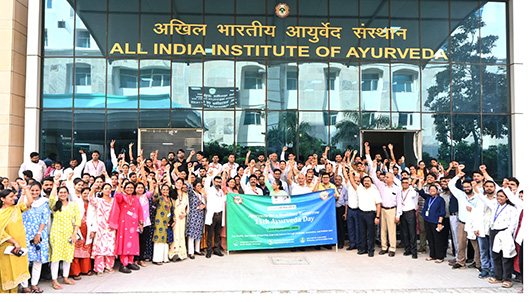
    AIIA organises public awareness rally on 11th Ayurveda Day

    The All India Institute of Ayurveda (AIIA), New Delhi, an autonomous organisation under the Ministry of Ayush, Government of India, organised an “Ayurveda Public Awareness Rally” today to mark the…

    UKHSA and University of Oxford scientists uncover genetic changes in the bacteria causing severe Kent meningococcal disease outbreak

    Scientists from UKHSA, the University of Oxford and a collaboration of academic institutions have used bacterial genome sequencing to understand why the meningococcal disease outbreak in Kent earlier this year…

    Leave a Reply

    Your email address will not be published. Required fields are marked *

    You Missed

    AIIA organises public awareness rally on 11th Ayurveda Day

    AIIA organises public awareness rally on 11th Ayurveda Day

    UKHSA and University of Oxford scientists uncover genetic changes in the bacteria causing severe Kent meningococcal disease outbreak

    UKHSA and University of Oxford scientists uncover genetic changes in the bacteria causing severe Kent meningococcal disease outbreak

    ‘Broad daylight dacoity’, says Supreme Court on overpricing of essential cancer drugs

    ‘Broad daylight dacoity’, says Supreme Court on overpricing of essential cancer drugs

    CDSCO finds one spurious drug sample in Delhi, 220 NSQs in Aug surveillance

    CDSCO finds one spurious drug sample in Delhi, 220 NSQs in Aug surveillance

    FSDA cancels 16 pharmacy licences, suspends 8, including Pfizer depot

    FSDA cancels 16 pharmacy licences, suspends 8, including Pfizer depot

    Excellence of Accredited Hospitals to be judged on how Friendly they are with Patients

    Excellence of Accredited Hospitals to be judged on how Friendly they are with Patients