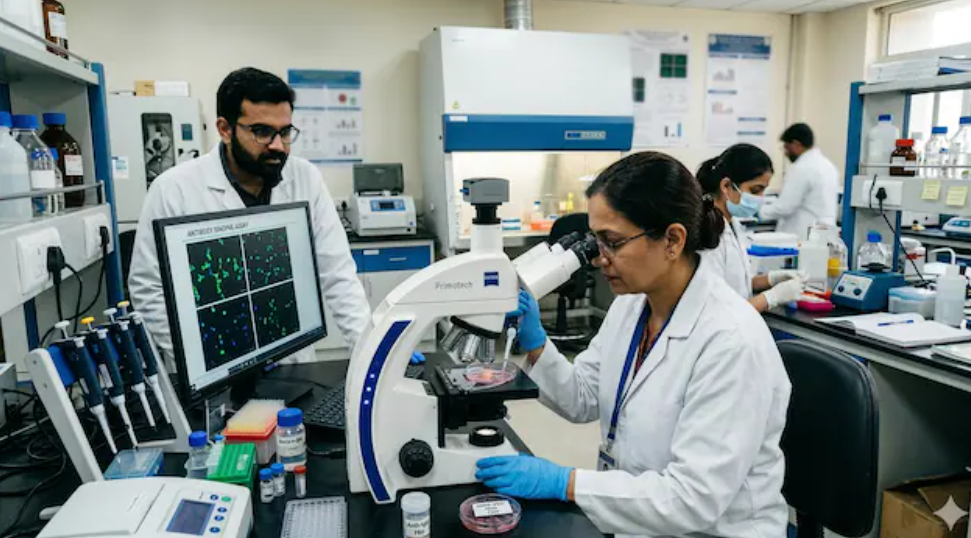
An initiative by IIT-Bombay may help decrease the cost of a sort of immunotherapy used to treat blood tumor to a tenth of that in the US.
Dr. Rahul Purwar from IITB’s biosciences department said that our team filed for a patent request, a month ago for the production of the CAR-T cell treatment and expectation it would, in the end, be accessible at a tenth of the US cost. It would take another couple of years before the medicines are accessible for the clinical trial at Tata Memorial Hospital, Parel.
CAR-T cell therapy is one of the numerous immunotherapy practices that guarantee to treat cancer by tweaking a patient’s own immune system. While immunotherapy agents were utilized as “last resort” for patients with advanced cancer till a couple of years back, it is developing as the preferred treatment for specific cancers, for example, melanoma or that of the skin.
The scientific meeting was held at the Tata Memorial and the team of around 100 doctors from the nation over who are interested in immunotherapy, set up Immuno-Oncological Society of India. Dr. Jyoti Bajpai, medical oncologist shared this has been done to popularize and set up guidelines for this youngest branch of growth treatment in India.
Prior, cancer treatment was about surgery, chemotherapy, and radiation. “In any case, the nascent branch of immunotherapy is recording improvements in disease treatment on a month to month or week after week basis.
The main hitch is the cost; the 100 patients at Tata Memorial pay from their pocket or protection for the Rs 2-3 lakh a month treatment. Dr. Prakash said that one patient who is suffering from metastatic lung cancer experiencing improvement after the treatment for 25 months.
The IIT-B patent would cut the cost of just a single sort of immunotherapy that helps blood cancer patients. “We will tie up with a pharmaceutical organization for make and ought to be prepared for clinical trial inside a year or two,” said Purwar from IIT. The trial will be held at Tata Memorial. CAR- T cell treatment requires drawing blood from patients and isolating out their T cells. An incapacitated infection is then used to hereditarily change the T cells to deliver fanciful antigen receptors or CARs. Whenever infused, CARs targets blood tumor cells.