
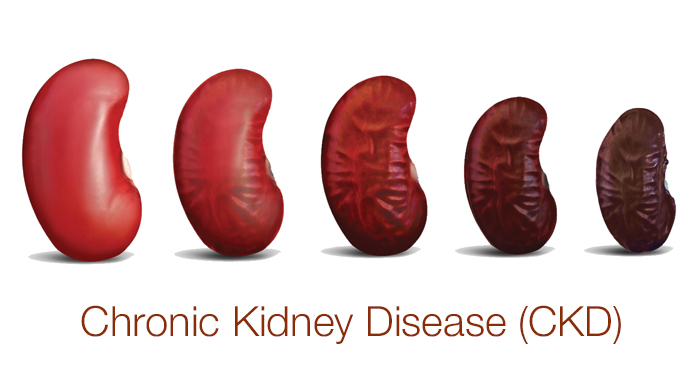
Chronic kidney disease is a worldwide public health problem with an increasing incidence, prevalence, and high cost. The results of chronic kidney disease may include kidney failure, decreased kidney function and cardiovascular disease. Current evidence suggests that some of these adverse results can be prevented or delayed by early detection and treatment. Unfortunately, chronic kidney disease is underdiagnosed and undertreated yet there are ways by which the extent of kidney functions can be enhanced. According to the National Kidney Foundation (NKF) Chronic kidney disease is defined as either kidney damage or decreased kidney function (decreased GFR) for 3 or more months. The NKF divided kidney disease into five stages. Glomerular filtration rate (GFR) is the best measure of kidney function. The GFR is the number used to figure out a person’s stage of kidney disease. The serum creatinine is used to calculate a GFR. Creatinine is a waste product from the muscle activity. When kidneys are working efficiently they remove creatinine from the blood. As kidney function slows, blood levels of creatinine rise. Fluid retention is common complication in kidney disease and manifests with swelling. In later stage, fluid may build up in the lungs and cause shortness of breath. Anemia is common with chronic kidney disease. The two most common causes of anemia with kidney disease are iron deficiency and the lack of erythropoietin. Bone disease develops in patients with kidney disease. The kidneys are responsible for excreting phosphorus from the body and processing vitamin D into its active form. High phosphorus levels and lack of vitamin D cause blood levels of calcium to decrease, causing activation of the parathyroid hormone (PTH). These and several complex changes cause the development of metabolic bone disease. Treatment of metabolic bone disease is aimed at managing serum levels of calcium, phosphorus, and parathyroid hormone. Metabolic acidosis may develop with kidney disease. The acidosis may cause breakdown of proteins, inflammation, and bone disease. There is no cure for chronic kidney disease. Yet, the Strategies for slowing progression and treating conditions underlying chronic kidney disease include the following:
Diet: Diet includes low level of sodium, fat, cholesterol and high amount of dietary fibre and whole grains.
Control of blood glucose: People with diabetes who do not control their blood glucose have a much higher risk of all complications of diabetes, including chronic kidney disease.
Control of high blood pressure: Control of blood pressure is highly recommended in kidney disease because kidneys act as the regulator of blood pressure.