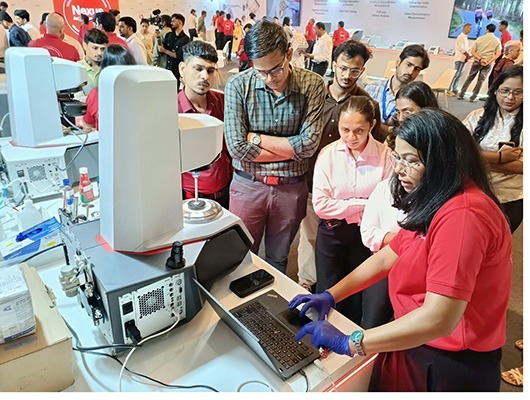
New Delhi : The Department of Pharmaceuticals (DoP) is in the process of preparing a roadmap to strengthen the testing infrastructure for medical devices to enable smoother transition to the upcoming licensing regime. A task force formed in this regard with representatives of the department and industry is expected to submit its recommendations this month.
According to an official document, a meeting was held on April 11, 2022 on the measures to be taken towards strengthening of testing infrastructure to enable smoother transition to licensing for medical devices under the leadership of S Aparna, secretary, DoP.
Following this, the Department constituted a task force under the Standing Forum of Medical Devices Associations, to prepare the road map for mapping and augmenting the laboratory resources required under Medical Device Regulations. The Committee is expected to submit its recommendations to the DoP in May.
It may be noted that in the first half of March, 2022, the DoP has released an approach paper to the National Medical Device Policy, a draft for stakeholder discussion, to position the country as the true ‘Diagnostic Capital of the World’. The Policy, which envisages various developments including setting up of NIPER-like institutions for the medical devices sector, is expected to be valid for a period of 10 years following which it will be revised.
The policy, envisaged to bring together the range of interventions government has taken into a coherent policy framework, will have focus on quality standards and safety of the devices, regulatory streamlining, support to build competitiveness through fiscal and financial support, infrastructure development, facilitation of R&D and innovation, human resource development, and brand positioning. The Department has also released a draft Uniform Code for Medical Device Marketing Practices, a voluntary code laying standard for promotion, marketing and sales of the medical devices prohibiting distribution of gifts or benefits to healthcare professionals.
The policy reforms are also necessitated by the need for transition from partial regulation of selected medical services to the complete regulation and licensing of all medical devices, which is underway and is expected to be completed by October 2023. This requires more clear articulation in terms of quality assurance and certification, said the Department in the policy document.
According to the DoP’s notification on February 11, 2020, the registration of these devices with the Central was kept voluntary for a period of 18 months with effect from April 1, 2020. After this, the registration of Class A & B devices shall be mandatory within 12 months and registration of Class C & D devices shall be mandatory within 24 months, after 18 months of voluntary registration period is over, thereafter, all medical devices will need to be licensed under the Medical Devices Rules, 2017 as amended by Medical Devices (Amendment) Rules, 2020, except 37 categories of medical devices.
Subsequent to the request of the Industries, CDSCO has notified that Licensing of Class A & B Medical Devices will be effective from 01.10.2022 and Licensing of Class C & D Medical Devices will be effective from 01.10.2023.
“A wide range of regulatory approvals necessitated by the variety of sciences and industry segments related to the medical devices sector creates high compliance and regulatory burden. The transition period in licensing by the CDSCO is an added challenge as manufacturers have to adjust to new processes over a predetermined time frame,” said the Department.
The efforts of the government is to reduce import dependence from 80% to below 30% in next 10 years and ensure self reliance quotient of 80% in Med-Tech by ensuring Make in India with SMART milestone and the policy lay down clear roadmap for accelerated growth of the medical devices sector while promoting safety and quality to systemically achieve the key objectives of access, equality and university; affordability; patient centres and quality care; preventive and promotive health; and security.