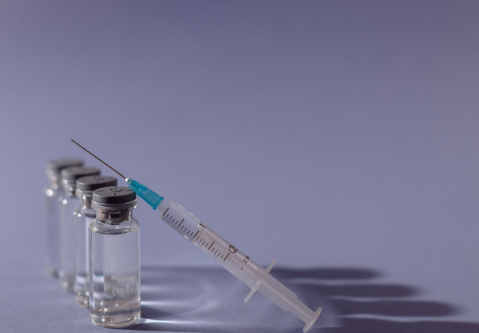
Stellenbosch , Keeping vaccines and medicines at the right temperature is critical for their efficacy and safety. But this is an often overlooked part of getting them to the people who need them.
In April 2025, the UK biotechnology company Stablepharma began the first human trial of a tetanus-diphtheria vaccine designed to remain stable without refrigeration.
The development has renewed interest in technologies that could do the job, particularly in places where electricity, transport, and storage infrastructure are limited. We spoke to immunisation experts Charles Shey Wiysonge and Chinwe Juliana Iwu-Jaja about this.
Why is vaccine storage such a big issue?
Vaccines take a long journey before reaching the person they are meant to protect. Some vaccines can be in transit and storage for several months: from the manufacturer to refrigerated vehicles, national cold rooms, district cold rooms, health facility fridges, and outreach sessions. Vaccines generally must remain between 2 degrees Celsius and 8 degrees Celsius. Some require much lower temperatures.
This uninterrupted system of refrigeration is the cold chain. It protects vaccines from losing potency through excessive heat or accidental freezing. The cold chain depends on reliable electricity, refrigerators and freezers, and temperature monitoring devices. Cold boxes, vehicles, fuel, maintenance technicians, and trained health workers are also essential.
Failure at any point can leave jabs unusable or their quality uncertain. These demands are especially difficult in remote communities, areas affected by conflict, and facilities with unreliable electricity. For example, after fighting erupted in Sudan in April 2023, UNICEF reported that unstable electricity and shortages of fuel for generators had compromised the central cold chain holding millions of vaccine doses.
Healthcare workers conducting outreach sessions in communities must carry vaccines in cold boxes with conditioned ice packs and monitor them carefully. The weight, limited storage space, and need to return to the facility within a defined period can restrict how far immunisation teams travel and how long they remain in communities.
Immunisation programmes have adopted measures that provide some flexibility. For example, the vaccine vial monitor is a small, heat-sensitive label attached to a vaccine vial .
The vaccine vial monitor changes colour in response to cumulative heat exposure. This helps healthcare workers determine whether the vial can still be used or should be discarded. It does not directly measure potency or detect freezing, which must be monitored separately.
Another approach is the controlled temperature chain. This allows specifically approved vaccines to be kept outside the standard 2 degrees Celsius-8 degrees Celsius range for a limited monitored period immediately before administration.
News that a new vaccine technology is being developed that could reduce the dependence on refrigeration is, therefore, very welcome.
What’s in the pipeline?
–
Researchers have tested a “fridge-free” version of an existing tetanus-diphtheria vaccine known as SPVX02. The technology uses trehalose, a naturally occurring sugar that protects some plants and organisms during drying. The vaccine is freeze-dried with trehalose into a powder. It is stored without refrigeration and mixed with water before injection.
The first human trial was published in eClinicalMedicine in September 2026. Sixty healthy adults in the UK were randomly assigned to receive either the “fridge-free” vaccine or one of two licensed tetanus-diphtheria vaccines. The experimental formulation was well tolerated. It generated excellent immune responses .
Laboratory stability data before this trial showed that the fridge-free vaccine can remain stable for at least 24 months at temperatures of up to 30 degrees Celsius.
This is an important proof of concept. But the product is not ready for African immunisation programmes yet. Further studies are needed. These must include larger and more diverse populations, including the intended users of the vaccine.
What could it mean for African countries?
If subsequent evidence and regulatory reviews are favourable, fridge-free vaccines could make delivery more flexible.
For example:
• In the Sahel and the Horn of Africa, mobile teams could reach pastoralist and nomadic communities without depending on ice-pack production.
• In island, mountainous and sparsely populated settings, vaccines could tolerate longer journeys.
• In conflict and humanitarian emergencies, they could be positioned closer to displaced populations even where electricity and secure transport are intermittent.
• They could ease pressure on crowded refrigerators in fast-growing urban areas and during mass campaigns.