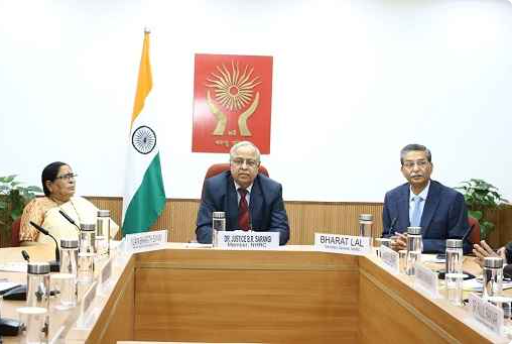
New Delhi: Serious legal gaps in the Drugs and Cosmetics Act, 1940, combined with acute shortages of manpower and infrastructure, continue to impede the Central Drugs Standard Control Organisation (CDSCO) and state drug regulators from effectively dismantling powerful interstate networks manufacturing and distributing spurious and substandard medicines, a top CDSCO official has officially acknowledged before the National Human Rights Commission (NHRC).
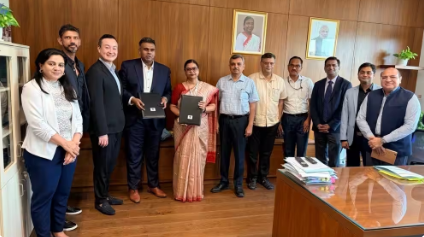
The admission was made by Joint Drug Controller (CDSCO) Shri Chandrashekhar Ranga during an Open House Discussion on ‘Measures to Curb Spurious Medicines in India’ held by the NHRC on 25 February 2026. According to an ASSOCHAM report, nearly 25% of India’s domestic pharmaceutical market — valued at over ₹15,000 crore annually — is now plagued by counterfeit or substandard drugs. The menace has witnessed a sharp 20-25% year-on-year surge after the COVID-19 pandemic, with major manufacturing and distribution hotspots in Bihar, Uttar Pradesh, Delhi, Ghaziabad, Gurugram, and Faridabad.
Ranga explicitly told the NHRC that “legal loopholes” prevent drug inspectors from effectively pursuing interstate rackets. While Section 22 of the Drugs and Cosmetics Act grants powers of search and seizure, inspectors lack critical police-like powers such as issuing summons to the accused. This severely restricts their ability to investigate cross-state networks independently, often leading to stalled probes due to non-cooperation by the accused.
The discussion, chaired by NHRC Member Justice (Dr.) Bidyut Ranjan Sarangi, underscored the human rights angle. NHRC Secretary General Shri Bharat Lal emphasised: “Both spurious and substandard medicines impact the right to life and health… Medicines must heal, not harm.” He distinguished between ‘spurious drugs’ (counterfeit/fake, produced by criminal networks with no identifiable manufacturer) and ‘substandard drugs’ (genuine products failing quality standards), citing the National Survey on Drugs which found about 10% of government samples to be substandard.
NHRC Member Smt. Vijaya Bharathi Sayani shared a personal family tragedy: a relative suffered permanent loss of eyesight due to poor-quality medicines, calling for stronger oversight. Former NHRC Member Shri Rajiv Jain proposed sweeping reforms including special drug courts, mandatory QR codes and blockchain-based track-and-trace systems, compulsory NABL-accredited laboratories, AI-driven anomaly detection, surprise inspections, whistle-blower protection, and a centralized national database.
Additional enforcement challenges highlighted include:
Severe manpower shortages: Out of 419 sanctioned posts of inspectors in CDSCO, nearly 230 remain vacant. In Delhi alone, 25 inspector posts are empty.
Infrastructure deficits: Lack of vehicles, proper storage for seized drugs, adequate laboratory capacity, and dedicated investigation officers.
Jurisdictional issues: Many cases remain pending in Judicial Magistrate First Class courts instead of being transferred to Sessions Courts as directed by the Supreme Court, resulting in low conviction rates and prolonged delays.
The NHRC had earlier taken suo motu cognizance in October 2025, issuing notices to the governments of Madhya Pradesh, Rajasthan, and Uttar Pradesh, along with central authorities, over media reports of child deaths linked to contaminated cough syrups.
Dr. Keshav Kumar, NHRC Special Rapporteur, called for central and state task forces, inter-agency coordination, training for law enforcement, victim compensation, and international collaboration. The meeting concluded with recommendations for a comprehensive centralized databank, technological interventions (AI, predictive analytics), capacity-building for inspectors, and coordinated centre-state enforcement mechanisms.
The revelations have intensified calls for urgent legislative amendments to empower drug inspectors, massive recruitment drives, and technology-driven reforms to safeguard public health from the growing threat of spurious medicines.
Acknowledgement: This news draft is prepared by integrating official statements and detailed proceedings from pages 7 to 9 of the NHRC Newsletter (February 2026 edition) with contemporaneous reporting by Live Hindustan. The article faithfully incorporates verbatim quotes, statistics, and recommendations from the NHRC Open House Discussion, including contributions by Shri Chandrashekhar Ranga, Shri Bharat Lal, Justice (Dr.) Bidyut Ranjan Sarangi, and other participants.