LAGOS, Nigeria— In a major breakthrough against cross-border narcotics trafficking, the National Drug Law Enforcement Agency (NDLEA), operating in conjunction with the Nigeria Customs Service and other joint security agencies, has intercepted a massive shipment of powdered tramadol imported from India at the Apapa Port in Lagos.
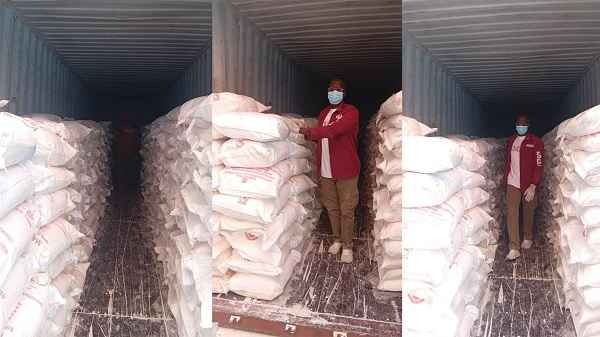
The illicit consignment, which was falsely declared by the importers as maize starch, has an estimated street value exceeding ₦6.98 billion.
According to an official statement released by the NDLEA Director of Media and Advocacy, Femi Babafemi, the cargo was first flagged on October 2, 2026, during a meticulous joint security examination at the APM Terminals within the port complex.
Forensic Validation and Scale of Recovery
Following the initial discovery, suspected samples were immediately dispatched to the NDLEA’s forensic laboratory, which officially confirmed the substance to be tramadol hydrochloride powder.
Narcotic agents subsequently initiated the physical extraction and separation process. On Wednesday, October 14, 2026, anti-drug operatives successfully recovered a staggering 349 bags of the prohibited synthetic opioid powder. The combined gross weight of the recovered consignment stood at 8,725 kilogrammes.
Part of a Wider Crackdown
The Apapa Port interception represents a pivotal victory in the agency’s ongoing, intelligence-led offensive against synthetic drug syndicates. The NDLEA noted that this bust was part of a larger, coordinated national sweep conducted during the same week, which also saw the retrieval of 55 kilogrammes of “Canadian Loud” (a potent cannabis strain) valued at ₦165 million at the nearby Tin Can Island Port, alongside multiple arrests across several Nigerian states.
Legal frameworks in Nigeria heavily restrict the distribution of tramadol due to its widespread abuse and severe public health implications, with the maximum medically approved dosage capsule strength capped at 100mg. The processing of over 8.7 tonnes of raw tramadol powder indicates an attempt by traffickers to manufacture massive volumes of high-dose illicit pills locally.
Security agencies have opened a full-scale investigation to track down the local clearing agents, corporate fronts, and international syndicates linked to the multi-billion naira Indian export operation.