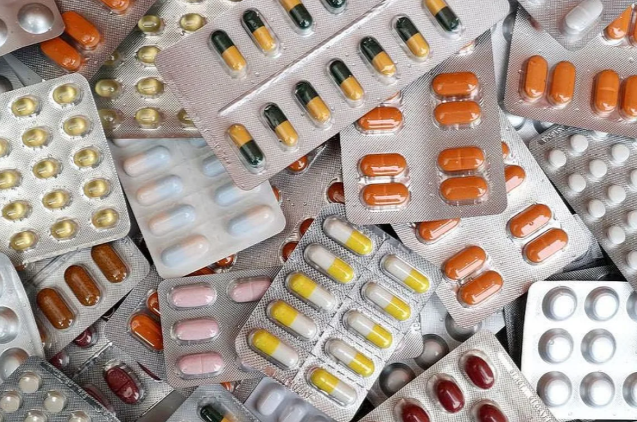
GUWAHATI : Online pharmacies have been increasing the flow of narcotic drugs to the northeastern states of the country, alleged the Association of Advanced Pharmacy Practitioners (AAPP) on March 6.
More than 50 e-pharmacies are running online businesses in India with the market size (2019) pegged at $0.5B – approximately 2-3 per cent of the total Indian pharmacy sales.
According to a study, substance use is significantly higher among the male adults of the North East than among those from elsewhere in the country. The percentage prevalence was 50.03 per cent for India as a whole, for non-North East states it is 50.37 per cent and in the states of North East 70.83 per cent of the men in the 15 to 54 age group indulge in substance abuse.
“While online pharmacies provide increased access to medicines and services, consumers may inappropriately self-diagnose or self-medicate, engage in medically unnecessary behaviour or substance abuse, or potentially encounter drug-to-drug interactions, contraindications or adverse effects,” said Birendra Kumar Barman, president AAPP.
The AAPP on Monday released the digital edition of Pharmalight in a function organised on the occasion of the birth anniversary of the founder of India pharmacy education, Mahadeva Lal Schroff.
The Pharmacy Council of India (PCI) has announced March 6 as the National Pharmacy Education Day to commemorate the birth anniversary of Professor Mahadeva Lal Schroff and to recognise his contribution to establishing pharmacy education in the country.
“This introduces the significant potential for harm to the health of consumers, termed preventable patient harm resulting from an injury that occurs from the use of information, services or products delivered or enhanced through the internet and related technologies,” Barman said.
“There are also other non-health related risks including breach of privacy, theft of personal information or fraud where products are not delivered. This highlights the importance of health professionals in ensuring consumers are informed and empowered in the decision-making process,” Barman also said.
“Substandard and falsified medicines are a major threat to public health. Poor-quality medicines increase risks of morbidity and mortality through adverse drug interactions, prolonged illness and heightened risk of treatment failure,” Barman further said.
“The government has no control over such online pharmacies. These pharmacies are giving lucrative discounts to the customers, which is also doubtful. That is why we demand the National Pharmaceutical Pricing Authority (NPPA) for One Molecule One Price in fixation of prices of medicines,” said Gynendra Haloi, general secretary AAPP.
“Given such irregularities, we also urged the government to implement the new prescription format of India. As per the new guidelines, allopathic doctors must write prescriptions legibly and in capital letters as well as furnish a complete and detailed prescription. The physicians have to also mandatorily mention the patient’s address and keep blank spaces in which the pharmacist can specify his/her address. But surprisingly, the government has not considered it for implementation even as it was approved by the Medical Council of India (MCI),” he said.
“Due to the misuse of online pharmacies, the Drugs Controller General of India (DCGI) has issued show cause notices to 20 online sellers, including Amazon and Flipkart Health plus over the online sale of drugs in violation of norms. Such notices have been issued on February 8 in Gujarat,” he said.
“Under Section 42 of Pharmacy Act 1948, the medicines have to be delivered by pharmacists only. But the online pharmacies are not following this rule,” he also said.
“We have been demanding the government for introducing DFA (Drug Enforcement Agency) code to regularize the system. A DEA number is an identifier assigned to a health care provider such as a physician, physician assistant, nurse practitioner, optometrist, podiatrist, dentist, or veterinarian allowing them to write prescriptions for controlled substances,” Barman said.
“We are also planning to launch a series of mass awareness programmes across the state to reach out to the public on this issue. We want the people should be aware of such things in purchasing medicines,” he added.