New Delhi: The Bureau of Indian Standards (BIS) has sanctioned 82 Research & Development (R&D) projects to faculty members of various prominent technical institutes, including IITs, NITs, and other experts, to expand further, diversify, and accelerate research and development activity.
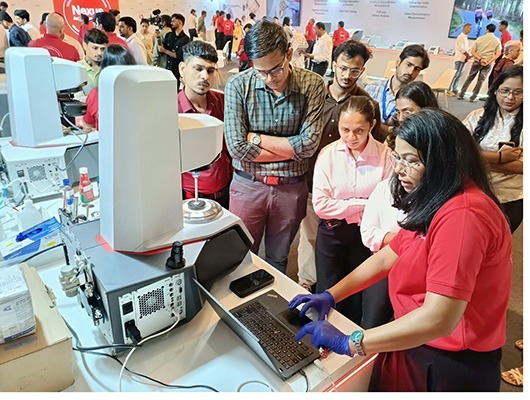
These projects, each with a budget of up to ten lakh rupees and a completion timeline of six months, are not confined to theoretical reviews but involve extensive field-level studies. The focus areas of these projects include cutting-edge domains such as: Artificial Intelligence, Blockchain Technology, Medical Devices, Renewable Energy, Sustainability, Smart cities, and Digital Transformation.
By addressing these emerging areas, BIS aims to develop standards that safeguard consumers and ensure the quality and reliability of innovative products and services.
In addition to the 82 sanctioned projects, 99 more are in the allotment process, with another 66 projects available for application. These opportunities can be accessed through the BIS website at BIS R&D Projects. This initiative enhances the standardisation process and substantially supports the research community, fostering an environment of innovation and excellence in academic institutions across India.
Shri Pramod Kumar Tiwari, Director General, BIS, highlighted the significance of these efforts and stated, “Our collaboration with premier educational institutions and the sanctioning of numerous R&D projects signify our commitment to advancing the standardisation process in line with technological advancements and evolving industry needs. With the enhanced focus on research and development in our standards formulation process, we aim to ensure that our standards are robust, relevant, and capable of addressing the challenges of modern technology and industry practices.”
BIS remains dedicated to developing comprehensive, up-to-date standards that reflect the latest technological trends and industry practices. Through these enhanced R&D efforts, BIS seeks to safeguard consumer interests and contribute to developing a safer, more reliable marketplace in India.
The Bureau of Indian Standards (BIS), as the National Standards Body of India, continues to spearhead the development of Indian Standards for products, processes, and services. To date, BIS has formulated more than 22,000 Indian Standards, playing a crucial role in ensuring the quality and safety of a wide array of goods and services in the country. Recognising the vital importance of Research & Development (R&D) in the standardisation process, BIS is intensifying its efforts to address the challenges posed by rapid technological advancements and the transformative changes in business and social spheres.
In response to the increasing diversification, innovation, and complexities in the manufacturing sector and the evolution of services, BIS has emphasised the need to integrate R&D projects into the standardisation process. This integration requires leveraging an extensive network of domain experts capable of conducting thorough research and development work. To expand the existing network, BIS has entered into Memorandums of Understanding (MoUs) with premier educational institutions, including IITs and NITs, thereby tapping into the vast intellectual capital available with their faculty and research scholars.
Through these MoUs, BIS aims to promote research and development necessary for standards formulation while simultaneously supporting the research ecosystem within these educational institutions. This strategic partnership facilitates a comprehensive approach to R&D, encompassing focus group discussions on chosen subjects for standardisation, and detailed field-level studies of current processes and practices in product manufacturing and service delivery.
For more information about BIS’s R&D initiatives and to explore available projects, the BIS website, i.e. www.bis.gov.in, may be visited.