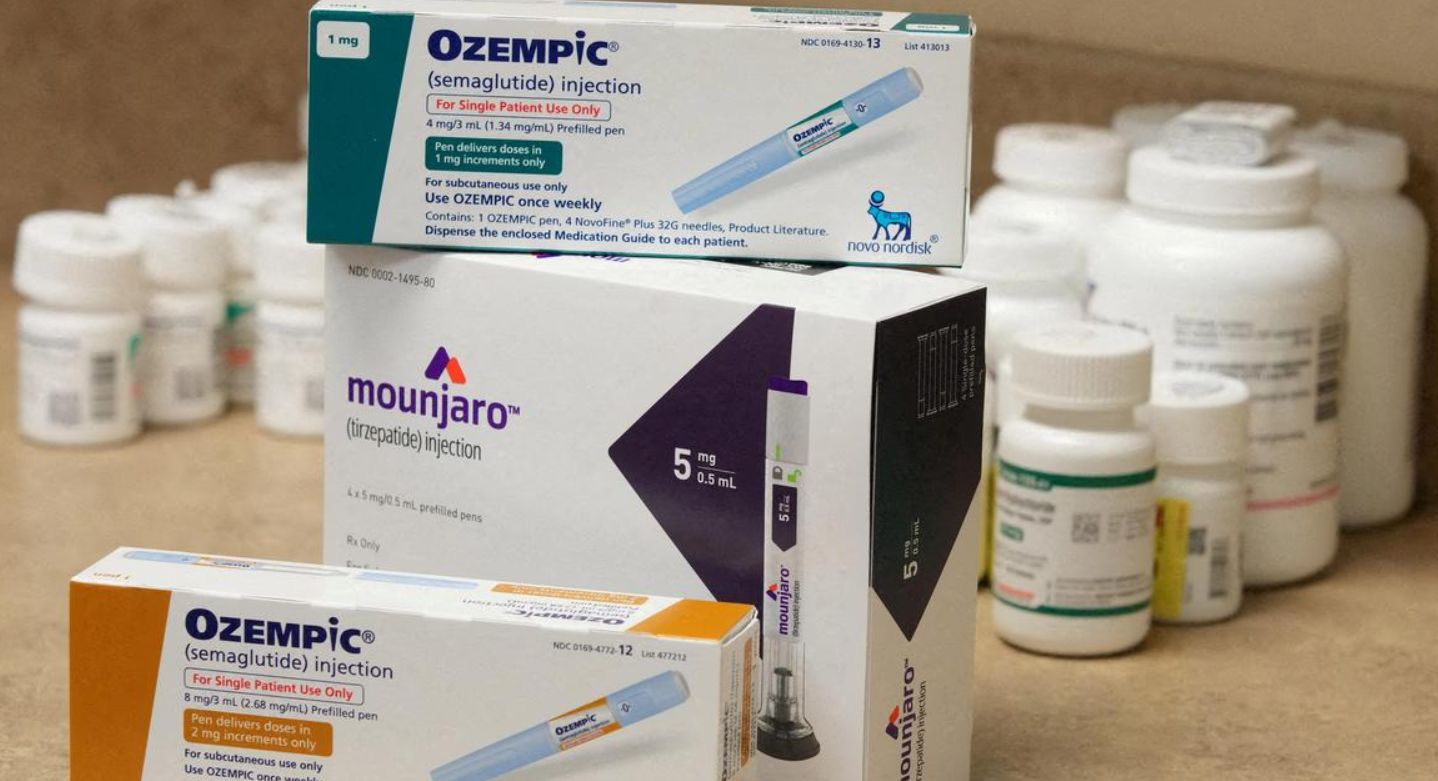
Ozempic and Mounjaro are brand names of the ‘GLP-1 receptor agonist’ class of medicines, which help one manage diabetes and obesity by targeting appetite and enhancing satiety, resulting in a significant weight loss and cardiovascular benefits.
Fake and falsified obesity drugs could be prompting a public health concern driven by high prices, a lack of insurance and desire to lose weight, according to a world report article published in The Lancet journal.
Author Sophie Cousins, an Australian writer and health journalist based in south Asia, writes about how counterfeit Ozempic and Mounjaro are on sale in vacation areas in Mexico and at pharmacies on the border with the US.
Shabbir Safdar, executive director of the Partnership for Safe Medicines, a public health group focused on the security and safety of medicines in the US supply chain, said there is more fraud around weight-loss injectables than he has seen at any other point in his career in tracking drug supply safety, Cousins reports.
“We’ve not ever seen this. It’s a big issue,” Safdar says.
Ozempic and Mounjaro are brand names of the ‘GLP-1 receptor agonist’ class of medicines, which help one manage diabetes and obesity by targeting appetite and enhancing satiety, resulting in a significant weight loss and cardiovascular benefits.
Safdar said “perfect-looking” counterfeit Ozempic, with fake labels and boxes, make it near impossible to decipher what is real and what is not — a lot of counterfeit drugs originate in Mexico.
“We see these for sale in vacation areas in Mexico or at border pharmacies. It’s not real. It’s almost certainly re-wrapped pens. But there are Americans who see how cheap Ozempic pens are in Mexico and think it’s amazing,” he said.
Counterfeit GLP-1 receptor agonists often contain incorrect dosages, harmful ingredients, or entirely lack active ingredients, leading to ineffective treatment and potentially life-threatening complications such as hyperglycaemia and cardiovascular issues, according to an August 2024 research, published in the Journal of Medicine, Surgery and Public Health.
In December 2025, the US Food and Drug Administration (FDA) issued a warning after it seized dozens of counterfeit Ozempic products that had been distributed illegally outside the authorised supply chain, adding that the agency was aware of six adverse events, Cousins reports.
The World Health Organization (WHO) also has noted a spike in reports of falsified GLP-1 receptor agonists, which have been detected in almost 60 countries, the report says.
A WHO spokesperson said the trend has continued to intensify due to a rising demand, an increase in self-diagnosis and self-prescription practices, and unregulated online sales, Cousins writes.
“WHO considers the spread of falsified GLP1 RA [receptor agonist] products a significant and growing threat to patient safety and public trust…the availability of tablet forms of GLP1 RA products may make it easier for falsifiers to produce at large scale,” the spokesperson is quoted as saying.
“WHO recommends that these products are prescribed by qualified health-care professionals and used under clinical supervision to ensure appropriate dosing, indications, and follow-up,” the spokesperson adds.
Anthropologist Alexandra Brewis, a professor in the school of human evolution and social change at Arizona State University in the US, studies when and how the problem of obesity should or should not be tackled, the article reads.
“Regardless of how the drugs are rolled out, the reality is that it’s costly and tricky for some to access them and use them. We’ll then see large bodies as failing in the public imagination and worsening stigma. It denies the reality of what it means to live with time and financial poverty,” Brewis said.