New Delhi: Indian researchers have developed an experimental “smart” cancer drug designed to remain largely inactive in healthy tissues and activate primarily inside cancer cells, potentially reducing the severe side effects associated with traditional chemotherapy.
The Ministry of Science and Technology announced the development of the candidate drug, named RK-251. It was created through collaborative research led by Dr. Asis Bala of the Institute of Advanced Study in Science and Technology (IASST), an autonomous institute under the Department of Science and Technology, and Dr. K.P. Bhabak of the Indian Institute of Technology Guwahati.
Conventional chemotherapy often damages healthy cells along with cancerous ones, leading to significant adverse effects. This has driven the search for targeted therapies that stay inactive while circulating in the body and switch on only at tumour sites.
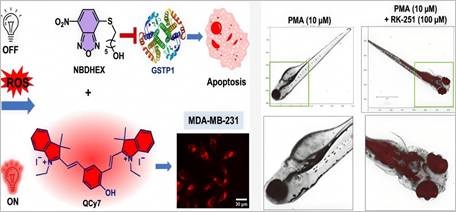
RK-251 is engineered as a reactive oxygen species (ROS)-responsive prodrug. Cancer cells frequently produce elevated levels of ROS. When the compound enters a cancer cell, the high ROS concentration triggers its activation, releasing the potent anticancer molecule NBDHEX. This compound blocks target proteins that many cancer cells rely on for survival and resistance to treatment.
In preclinical studies, RK-251 demonstrated strong activity against aggressive triple-negative breast cancer cells while showing substantially lower effects on healthy cells. Additional testing in zebrafish embryos (Danio rerio) revealed no obvious signs of toxicity. The drug also exhibited the desired fluorescence response in the presence of ROS, which could aid in tracking its activation.
Researchers noted that the findings suggest the candidate may be suitable for further investigation. However, more studies are required before the technology can advance to testing in patients.
The work was published in the ACS Journal of Medicinal Chemistry.
The Ministry of Science and Technology highlighted the joint efforts of the IASST and IIT Guwahati teams in advancing this approach toward more selective cancer therapies.
Source: PIB