New Delhi: Two painkiller medicines are under the scanner of the Union government following reports of drug abuse.
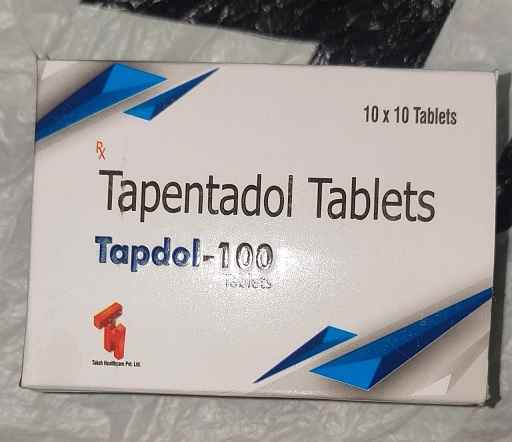
Last year, the apex drug regulatory body of India — Central Drugs Standard Control Organisation (CDSCO) — moved the proposal to tighten the noose around the sales of Pregabalin and Tapentadol painkillers after receiving complaints around ‘misuse and intoxication’. While Tapentadol is a serious habit-forming opioid-based drug, Pregabalin has become a problem in Punjab — a state already battling with drug abuse.
Commonly referred to as “Koda”, the painkiller is used by Punjab’s youth to get high because it is inexpensive and not punishable under the Narcotic Drugs and Psychotropic Substances (NDPS) Act.
Last year, in September, the drug regulatory body formed a sub-committee under the Drug Consultative Committee (DCC) headed by Dr Atul Ambekar, professor at the department of psychiatry, All India Institute of Medical Sciences (AIIMS), New Delhi.
Based on the report submitted by the sub-committee, CDSCO — the regulatory wing under the Union health and family welfare ministry — is likely to move Tapentadol into the category of ‘psychotropic substances’.
These substances are regulated by the Narcotic Drugs and Psychotropic Substances Act — similar to the popular painkiller Tramadol. Similarly, Pregabalin may soon be shifted to Schedule H1 where over-the-counter sales of medicine are banned and a valid prescription is required for making a purchase.
Under Schedule H1, a chemist must keep record of sales in a separate register and maintain the record of purchases and prescriptions. Also, drugs specified in Schedule H1 are labelled with the symbol Rx which is in red and clearly displayed on the left top corner of the label.
As per the existing regulatory provisions, Tapentadol falls under Schedule H1 drugs whereas Pregabalin does not fall under Schedule H or H1, compelling the need for a prescription.
According to the detailed report prepared by the sub-committee, the WHO Expert Committee on Drug Dependence in 2014 reviewed Tapentadol and recommended that “owing to the insufficiency of the daţa regarding dependence, abuse and risk to the public health, Tapentadol may not be placed under international control but may be kept under surveillance”.
Hence, the department of revenue under the ministry of finance had requested for analysis of Tapentadol for its scheduling under the NDPS Act, 1985.
For Pregabalin, the Food and Drug Administration (FDA) of Punjab observed that the drug formulations containing this substance in the strength of 150 mg or 300 mg “are being misused for intoxication and these formulations are being seized from the licensed chemists and unlicensed premises by the drugs control officers…”
As per the report, the panel deliberated on the matter and discussed moving Tapentadol into Schedule X, considering its misuse potential.
Schedule X lists addictive drugs such as narcotics and psychotropics where medicines are kept under lock and key and a chemist is required to maintain all records — such as copies of valid prescriptions, amount of drug purchased and amount of drug sold — for at least two years.
However, finally, the panel decided to retain the drug under Schedule H1 as putting Tapentadol in Schedule X may restrict its availability, considering it is a widely used medicine.
“Putting Tapentadol in Schedule X will restrict its availability- for legitimate medical purposes, hence, Tapentadol shall be retained in Schedule H1 of Drugs Rules,1945.” It added: “If appropriate the matter may be conveyed to the Department of Revenue stating that to schedule Tapentadol as a Psychotropic substance under NDPS Act similar to Tramadol.”
For pregabalin and its preparations, the panel decided to include the drug in Schedule H1.