 In Remarkable Medical Rescue Aakash Healthcare’s snatched him from Jaws of Certain Death
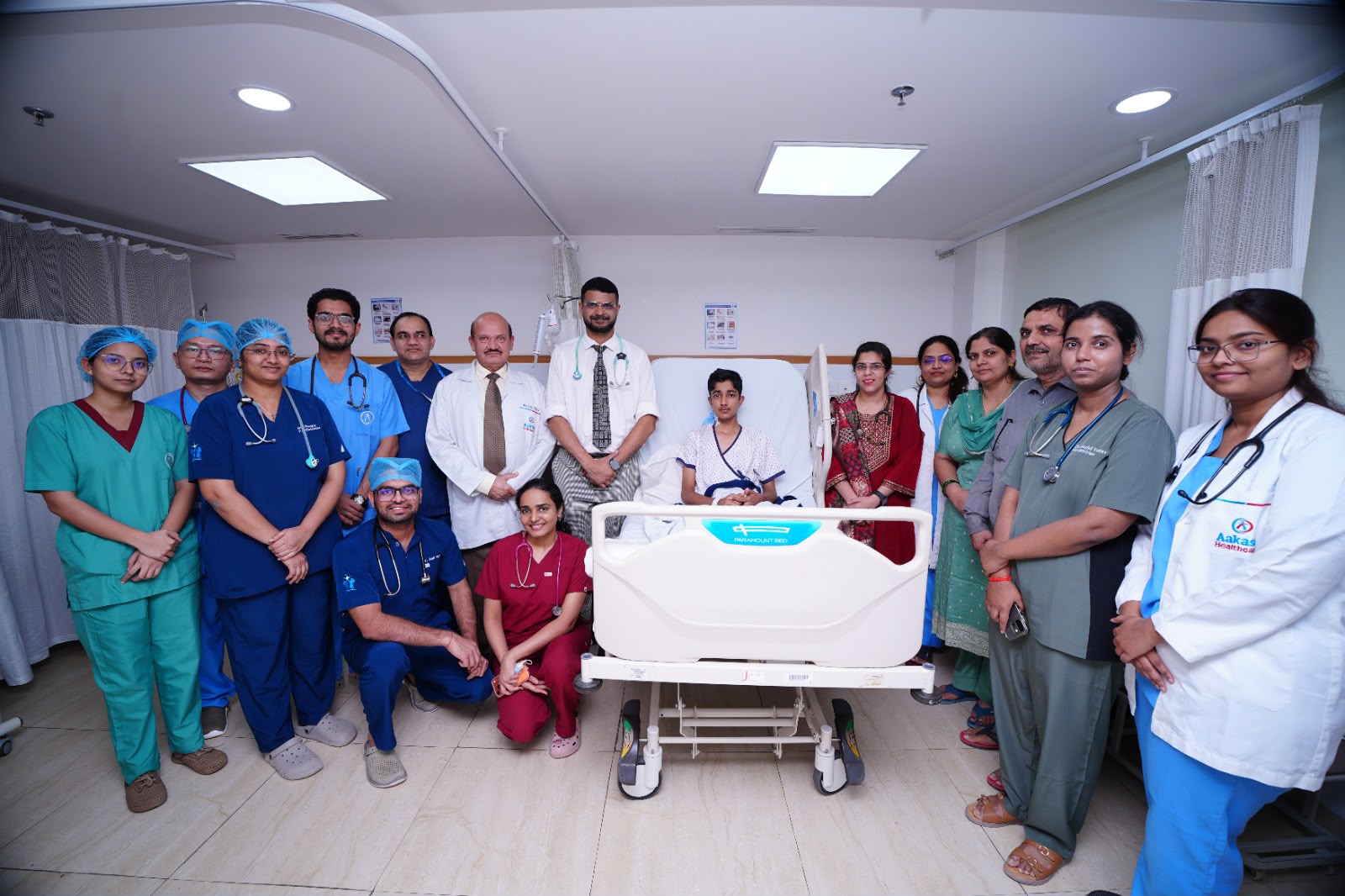
New Delhi: It is unheard of! Somone surviving hours after Krait bite !!!! surprise of the surprises- This is how most people would see this happening in India. Such narrow is the window of intervention that bite by a Krait, highly venomous, means certain death. In a remarkable medical rescue, Aakash Healthcare rescued a 14-year-old boy who suffered such life-threatening bite while sleeping in his hostel. The boy has recovered following timely intervention and specialized treatment at the hospital.
The incident occurred when the boy was sleeping in his hostel and was bitten on his finger by a Common Krait, one of India’s most venomous snakes. Unaware of the bite, he continued sleeping. However, when he woke up in the middle of the night, he found himself unable to open his eyes. His roommates immediately alerted the hostel nurse, following which he was rushed to a nearby government hospital.
Although he received anti-snake venom treatment at a local hospital, his condition continued to deteriorate. As he began losing consciousness and showed no significant signs of recovery, the decision was taken to shift him immediately to Aakash Healthcare for advanced medical management.
By the time he reached Aakash Healthcare, his condition was extremely critical. He was unable to open his eyes, speak, swallow or breathe independently. The doctors identified the condition as a neurotoxic snakebite, consistent with Krait envenomation, which can cause progressive paralysis by affecting the nervous system and the muscles responsible for breathing.
Interestingly, there were no obvious signs of a snakebite when he initially arrived at the hospital. A subtle reddish mark with tingling around his fingertip, corresponding to the bite site, was identified during subsequent clinical evaluation. The history of the incident, along with the evolving neurological symptoms, helped the medical team establish the diagnosis.
The doctors immediately initiated appropriate treatment, including anti-snake venom and supportive medical management. Given the extent of neurotoxicity and respiratory muscle paralysis, the child was placed on ventilator support for approximately two days, with continued intensive monitoring and multidisciplinary care.
Following treatment, his condition gradually improved. He is now breathing independently, no longer requires supplemental oxygen and is showing encouraging signs of recovery. He will, however, require further follow-up with ophthalmology and neurology specialists as part of his recovery and rehabilitation.
Dr. Syed Mustafa Hasan, Director – Paediatric Services & HOD of Paediatrics & Neonatology, Aakash Healthcare, said, “Krait bites can be particularly dangerous because the bite may initially go unnoticed and may not produce prominent local symptoms. The venom acts on the nervous system and can cause progressive paralysis, affecting the muscles responsible for eye movement, swallowing and breathing. In this child’s case, by the time he reached us, the neurotoxic effects had become severe, with significant respiratory muscle involvement. Timely recognition of the condition, administration of appropriate anti-snake venom treatment, ventilatory support and close monitoring were critical to his recovery. This case also highlights why any suspected snakebite, even without visible signs, must be treated as a medical emergency.”
Dr. Meena J., Senior Consultant, Paediatrics & Neonatology, Aakash Healthcare, said, “The child’s condition required careful and continuous monitoring as neurotoxic snake envenomation can progress rapidly. Our priority was to stabilise his breathing, manage the neurological complications and support his vital functions while the effects of the venom were being managed. It was encouraging to see him respond to treatment and gradually regain his ability to breathe independently. His recovery is the result of coordinated efforts and timely clinical intervention. He will continue to require specialist follow-up to ensure that his recovery progresses well.”
Dr. Aashish Chaudhry, Managing Director, Aakash Healthcare Super Speciality Hospital, said, “We are extremely happy and proud of our team of doctors and healthcare professionals who acted promptly and worked together to save the life of this young child. It is particularly heartening that we could bring this child back from such a critical condition around Diwali, a festival that symbolises hope, light and new beginnings. Saving a young life is perhaps the most meaningful Diwali gift for all of us. I congratulate the entire medical team for their dedication, expertise and commitment to patient care.”
Doctors urge vigilance and immediate medical attention in suspected snakebite cases. India is home to several venomous snake species, and snakebites remain an important public health concern. While snake encounters are more commonly associated with rural and forested areas, incidents can also occur in residential and institutional environments. Doctors caution that a Krait bite can be particularly deceptive. The bite may be painless or go unnoticed, and visible swelling or prominent local symptoms may be absent. Symptoms of neurotoxicity can develop progressively, including drooping eyelids, difficulty opening the eyes, difficulty speaking or swallowing, muscle weakness and respiratory paralysis.
The doctors advise that anyone suspected of having suffered a snakebite should be taken to the nearest equipped medical facility immediately, even if there are no visible bite marks or immediate symptoms. Patients should not wait for symptoms to develop or attempt home remedies. Timely medical assessment and appropriate treatment can be lifesaving.