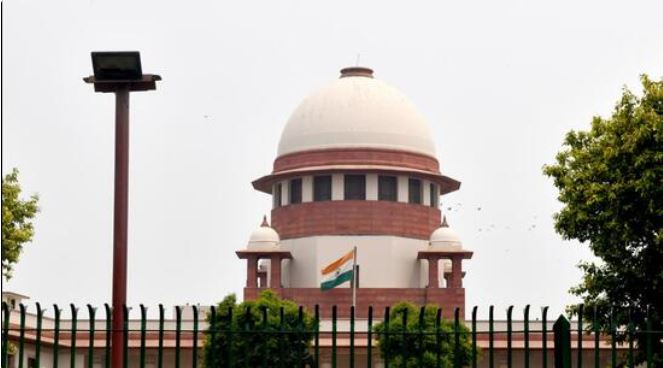
The Supreme Court on Tuesday declined to issue mandatory directions to regulate the prices of medicines and consumables sold by private hospitals for resident patients but urged states and Union territories (UTs) to consider framing appropriate policies to prevent inflated pricing and alleged exploitation.
The court was hearing a petition filed by Siddharth Dalmia in 2018, who sought directives against private hospitals allegedly compelling patients to purchase medicines and medical devices from in-house or designated pharmacies at inflated prices. (ANI)
The court was hearing a petition filed by Siddharth Dalmia in 2018, who sought directives against private hospitals allegedly compelling patients to purchase medicines and medical devices from in-house or designated pharmacies at inflated prices. (ANI)
A bench of justices Surya Kant and N Kotiswar Singh noted that while affordable healthcare is an essential component of the right to life under Article 21 of the Constitution, regulating the pricing of medicines and other consumables in private hospitals falls within the exclusive domain of policy decisions. The court further emphasised the need to balance concerns about patient welfare with the continued participation of private entities in the healthcare sector.
“It would not be advisable for this court to issue mandatory directions that can hamper the private sector, but at the same time, it is necessary to sensitise the states with respect to the problem of unreasonable charges and alleged exploitation of patients in private hospitals,” stated the court order.
The bench underscored the judiciary’s deference to policy-making bodies while also pressing for a review of existing healthcare pricing practices to ensure affordability and fairness for patients.
In its order, the top court acknowledged that India’s vast population and growing healthcare demands necessitate private sector involvement. “In proportion to the population of this country, states have not been able to deliver requisite medical infrastructure to cater to the needs of all kinds of patients. The states have therefore facilitated and promoted private entities to come forward in the medical field,” noted the court, adding that “even the State looks up to these private entities to provide basic and specialized medical facilities to the public.”
Given these considerations, the bench maintained in its order that imposing blanket regulations on private hospitals might not be advisable. “Would it be prudent for the Union/states to introduce a policy that regulates each and every activity in the private hospital space? Should the State adopt economic policies that have a dedicated clause on regulating or restricting prices of medicines and other consumables?” asked the bench, suggesting that a holistic approach was required.
The court was hearing a petition filed by Siddharth Dalmia in 2018, who sought directives against private hospitals allegedly compelling patients to purchase medicines and medical devices from in-house or designated pharmacies at inflated prices. The petitioner’s concerns stemmed from personal experience, as his mother, who underwent chemotherapy at private hospitals for breast cancer, was subjected to such practices.
Dalmia argued that such practices amounted to the “fleecing and exploitation” of patients and sought intervention under Article 21. He requested a directive for hospitals to refrain from enforcing such purchases and the formulation of a policy addressing this issue.
In response, the Union government pointed out that there is no compulsion for patients to buy medicines from hospital pharmacies, adding that health is a state subject, and it is up to individual states to frame policies in this regard.
State governments and UTs also defended their existing frameworks, citing initiatives such as Amrit Shops and Jan Aushadhi stores in government hospitals, which offer medicines at subsidised rates. They further relied on the Drug Price Control Order (DPCO), which regulates the prices of essential drugs. Some states highlighted cashless treatment schemes and other welfare measures tailored to their unique demographics.
Recognising that public health, sanitation, hospitals, and dispensaries fall under the State List,” the court ultimately refrained from issuing mandatory directives. However, it underscored the necessity of addressing patients’ concerns about excessive charges and urged the states and UTs to consider framing appropriate policy.
Concluding the matter, the court disposed of the writ petition while directing states to “consider the issue and take policy-appropriate decisions.”