 In first for India, World Congress of Gastroenterology comes calling to asses GI disease burden
New Delhi: As global and national burden of digestive diseases reach a critical crossroads, World Congress of Gastroenterology, in first for India,is all set to assess the severity of the situation GI has landed in. Of all the GI diseases, Liver seems to be in dire straits as fat’s stranglehold around it tightens. AIIMS experts, calling this upcoming Congress a seminal event, particularly red flagged about exacerbating fatty liver situation in India. They called for early detection of growing GI disease burden. The event will also showcase live the advancement in therapeutic endoscopy.
The global burden of gastroenterology diseases is on the rise, and almost every third person in the world has some gastrointestinal and liver disease-related symptoms. Furthermore, every second person is infected with Helicobactor pylori infection and every third person is infested by worms in their intestine. One of the biggest diseases of mankind now is fatty liver disease and every third person suffers from fatty liver disease. Gastrointestinal cancers and autoimmune diseases are on rise globally and also in India.
India is at the crossroads of a changing gastrointestinal disease landscape- increasing awareness, improved hygiene measures and effective national policies have significantly reduced the burden of communicable/preventive diseases in our country. However, a greater challenge in the form of metabolic conditions such as fatty liver and colorectal cancer awaits alongside persistent infections such as Helicobacter pylori and worm infestations.
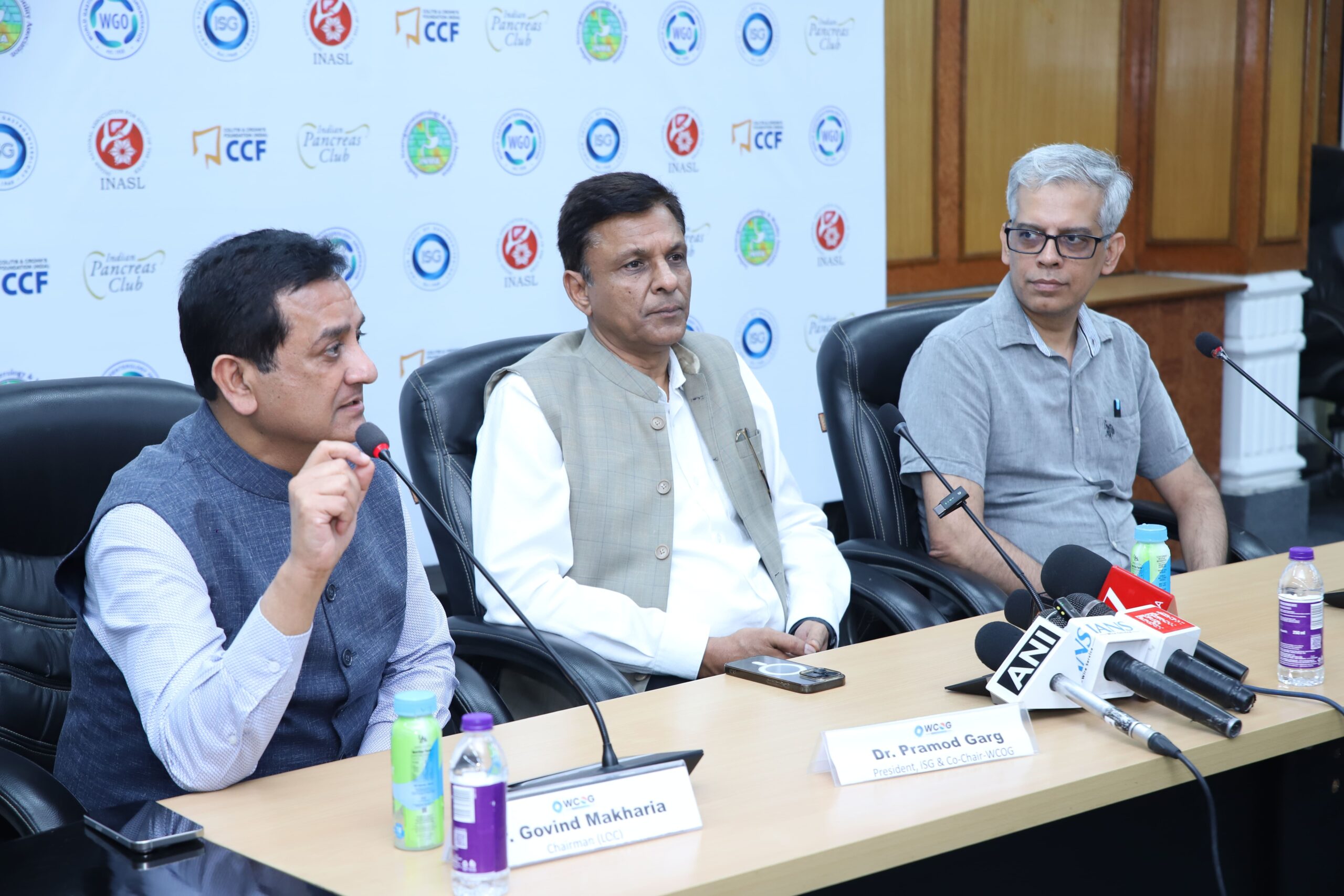
The discussion brought together Dr. Pramod Garg, Professor & Head, Department of Gastroenterology and Human Nutrition, AIIMS, New Delhi; President, Indian Society of Gastroenterology and Co-Chair, Steering Committee, WCOG 2026; Dr. Govind Makharia, Professor, Department of Gastroenterology and Human Nutrition, AIIMS, New Delhi and Chairman, Local Organising Committee, WCOG 2026; Dr Shalimar, Professor, Department of Gastroenterology and Human Nutrition Unit, AIIMS, New Delhi and Dr. Vineet Ahuja, Professor, Department of Gastroenterology and Human Nutrition, AIIMS, New Delhi and Secretary General of Crohn’s Colitis Foundation of India.
Fatty liver emerged as a key concern. AnAIIMS-led systematic review and meta-analysis found the condition in 38.6 per cent of Indian adults and 35.4 per cent of Indian children. It is closely associated with diabetes, obesity and hypertension. Yet, it can remain silent until liver damage has progressed- exemplified by a recent study which alarmingly reported that one in four patients with type 2 diabetes has clinically significant fibrosis. Recently India included fatty liver disease in itsNational Programme for Prevention and Control of Non-Communicable Diseases in 2021. Guidelines were subsequently issued for its detection at the primary-care level.
Dr. Pramod Garg said, “India is facing an epidemiological shift at this time. We have made significant strides in controlling preventable disease through awareness, vaccinations and improving quality of life, however alongside these we are now seeing metabolic disease on a scale we have never handled before. Fatty liver is the clearest example. The disease is easy to find if we look for it, and we become aware only after the patient falls ill. This is a greater challenge than before- we must move away from only treating diseases- we must now actively promote good health”
The experts also highlighted colorectal cancer as a growing concern. Cases are increasingly being seen in younger adults. India recorded40,430 new cases among men and 24,433 among women in 2022. Blood in the stool, persistent changes in bowel habits and unexplained weight loss should not be dismissed as routine gastrointestinal problems.
Dr. Govind Makharia said, “India has never been short of gastroenterologists or technology. What we have lacked is the habit of taking early symptoms seriously and neglecting our health. We often misattribute our symptoms to stress or simply overlook them. Some even take over-the-counter medications for months before they reach a doctor. We must realize that every time we fail to identify a disease early, we lose the opportunity to potentially modify its natural history. Any symptom that persists beyond two to three weeks should be evaluated.”
Persistent infections remain another important part of India’s GI disease burden.H. pylori remains widespread and is associated with peptic ulcer disease and gastric cancer.Worm infections continue to affect children and can contribute to anaemia and undernutrition. The experts also discussed celiac disease and inflammatory bowel disease (IBD), which are increasingly being recognised in India.Community-based research led from AIIMS found celiac disease in approximately one in 96 people in northern India.
Dr. Shalimar said, “WCOG 2026 comes at an important time for gastroenterology in India, particularly as we confront the growing burden of metabolic liver disease. With fatty liver disease affecting around one in three adults and children in India, understanding its links with diabetes, hypertension, obesity and dyslipidaemia is increasingly important. The conference will bring together national and international experts to discuss the latest evidence, emerging therapies and advances in care, while creating opportunities for young researchers to engage with experts and build new collaborations.”