New Delhi: Covishield elicited higher levels of antibodies against various SARS-CoV-2 strains in comparison to the government-backed Covaxin, a study led by the National Centre for Biological Sciences (NCBS) that compared the two primary COVID-19 vaccines administered in India indicated.
India’s vaccination drive began in April 2021, amid the delta wave of the COVID-19 pandemic during April-May 2021. More than 2.2 billion doses of the vaccine have been administered to the Indian population.
Across four clinical sites — Bangalore Baptist Hospital and St. John’s Medical College in Bengaluru; King Edward Memorial Hospital Research Centre and Symbiosis University Hospital and Research Centre in Pune — 691 participants took part in the non-randomised and laboratory blinded study between June 30, 2021 and January 28, 2022.
The study was a collaboration of eleven institutes such as the Institute for Stem Cell Science and Regenerative Medicine, the National Chemical Laboratory, the Indian Institute of Science Education and Research Pune and St. John’s Research Institute. It examined how receiving either Covishield or Covaxin affected their immunity both before and after vaccination.
The participants received Covaxin in two doses at four weeks apart and Covishield at three months apart, according to the government’s mandate. Both vaccines generate immune responses slightly differently. Covaxin developed by Bharat Biotech is an inactivated viral vaccine that generates antibodies and Covishield manufactured by the Serum Institute of India is a viral vector vaccine that attacks the copies of the COVID-19 ‘S’ protein.
The vaccine groups were subdivided into seropositive and seronegative participants. While the former refers to individuals with exposure to the virus, the latter refers to individuals who had not yet been infected with the virus when the study concluded.
In seronegative people, Covishield elicited near-complete seroconversion rates (the state of developing antibodies in blood) between 98.3 and 100 per cent versus 74.4 per cent for Covaxin. Scientist and professor Satyajit Mayor, NCBS-Tata Institute of Fundamental Research, told Down to Earth, “Among those who had no prior infection, the number of people who exhibited antibodies when they were vaccinated with Covaxin was comparatively lower to Covishield. The magnitude of antibody response was also lower in Covaxin.”
Similarly, seroconversion in individuals with prior infections was higher in Covishield than in Covaxin recipients (91.7 per cent vs 66.9 per cent). A significant proportion of seropositive Covaxin recipients (37.4 per cent) did not respond to vaccination, the researchers added further in the paper published in the journal The Lancet Regional Health Southeast Asia.
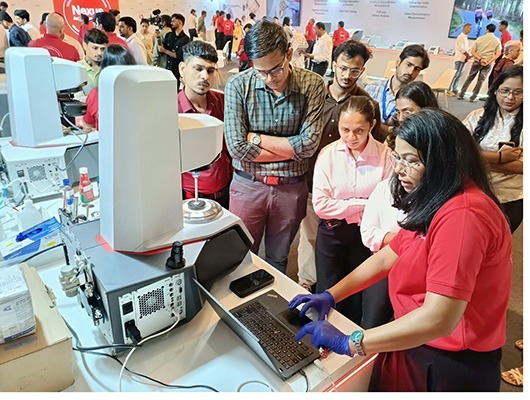
“We used two platforms to quantify antibodies, both quantitative assays for the detection of IgG antibodies, DiaSorin TrimericS and MSD, respectively, at Christian Medical College, Vellore,” Mayor added.
An immune response to SARS-CoV-2 involves neutralising antibodies as well as the generation of T-cells which were measured at the Bangalore Baptist Hospital. The researchers evaluated the two main types of T cells, namely, CD8, or cytotoxic T cells, which kill pathogens, and CD4, or helper T cells that recruit other cells.
“Covishield also elicited stronger CD4 and CD8 T cell responses in the earliest cohort used to track T cell responses, whereas Covaxin induced only CD4 T cell responses against spike protein in seronegative participants. Neither vaccine significantly enhanced T cell responses in seropositive participants,” the paper added.
The findings are intended to shape future vaccine strategies by offering insights into the immunity acquired post-vaccination. Mayor added, “If we have another vaccination round, this study would be invaluable.”