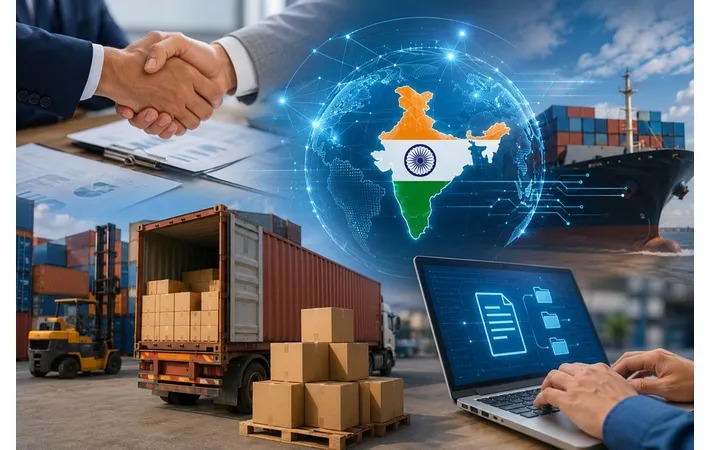
Mumbai: The Directorate General of Foreign Trade (DGFT) has introduced an automated facility for granting Export Obligation (EO) extensions in Advance Authorisation and Export Promotion Capital Goods (EPCG) Authorisation cases considered by the Policy Relaxation Committee (PRC) and EPCG Committee. The move is aimed at reducing repetitive applications and manual processing for pharma exporters that use these authorisations for importing inputs and capital goods against export commitments.
The facility forms part of DGFT’s ongoing efforts to digitalise pharma trade processes, simplify regulatory procedures and reduce manual intervention. For pharma exporters, the change is expected to streamline the process of securing additional time to meet export obligations under Advance Authorisation and EPCG schemes, particularly in cases where an extension has already been approved by the concerned committee.
According to DGFT, where an exporter approaches the PRC/EPCG Committee for an EO extension and the committee approves the request, the approved extension will now be processed directly through the DGFT system. The exporter will not be required to submit a separate EO extension application to the concerned Regional Authority after the committee has taken its decision.
The process begins with the pharma exporter submitting a request for EO extension for the concerned Advance Authorisation or EPCG Authorisation before the PRC/EPCG Committee. If the committee approves the extension, the decision will be processed through the system. A communication will then be generated on the submitted PRC/EPCG Committee file requiring the exporter to pay the prescribed EO extension fee.
The pharma exporter will have to make the requisite payment through the DGFT portal and submit the required response. Following successful payment and submission of the response, the EO extension file will be automatically generated and processed in the system. The corresponding EO Extension Letter will thereafter be generated electronically.
DGFT said the automated mechanism eliminates the need for exporters to re-apply for an EO extension after receiving a favourable decision from the PRC/EPCG Committee. It also reduces subsequent manual processing and verification requirements at the Regional Authority level.
For pharmaceutical exporters, the change is relevant to companies operating under Advance Authorisation, which facilitates duty-free import of inputs required for export production, as well as EPCG Authorisation, which supports the import of capital goods against prescribed export obligations. Delays in securing EO extensions can affect compliance timelines and related authorisation records, making a streamlined process relevant to exporters managing multiple regulatory and export requirements.
DGFT has also stated that the revised EO expiry date will be updated in the system records of the concerned authorisation and transmitted to ICEGATE. This is intended to ensure that the extension approved through the committee process is reflected across the relevant digital trade records without requiring separate manual intervention.
“DGFT has been undertaking various measures towards digitalisation, process simplification and reduction of manual intervention with a view to facilitating the trade community and further enhancing Ease of Doing Business,” according to a DGFT official.
The automated facility is therefore intended to link the committee decision, fee payment, approval and generation of the EO Extension Letter within a single digital workflow. This removes an additional application stage for exporters and is expected to reduce procedural duplication in cases where the extension has already been approved by the competent committee.
DGFT has made a detailed Help Manual available on its portal to guide pharma exporters and other stakeholders on the new functionality. Pharma exporters have also been invited to submit feedback and suggestions regarding the facility through the designated DGFT email channel.
According to DGFT, “For assistance with the facility, pharma exporters and other trade stakeholders can approach the DGFT Helpdesk through its toll-free support mechanism or raise a service ticket through the DGFT website under the Services section and the DGFT Helpdesk Service. The development is part of the broader shift towards automated trade administration, with the objective of making export compliance processes more predictable, digitally integrated and less dependent on repeated manual submissions.”