
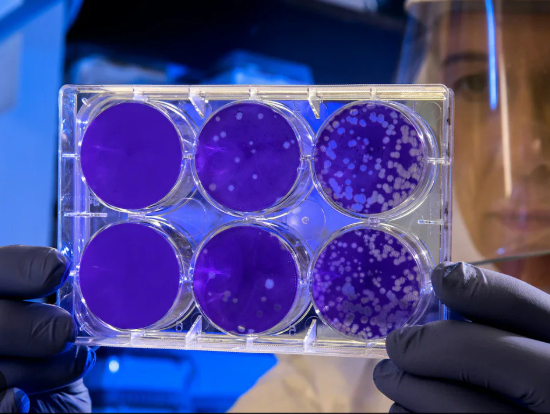
Pune: A recent study at the Institute of Science Education and Research (IISER), Pune, found that Escherichia coli can quickly survive antibiotics by temporarily making extra copies of a key gene. This helps them adapt quickly and can lead to antibiotic resistance, which is a big problem worldwide. E. coli is a common gut bacterium that can cause urinary tract infections.
“The E. Coli bacteria can survive a broad-spectrum antibiotic called trimethoprim as it copies a gene called folA, which helps them resist the drug. This increases the amount of the protein the antibiotic targets and helps the bacteria grow even in the presence of the drug. These extra copies usually disappear, but they give the bacteria time to develop permanent resistance mutations,” Nishad Matange, assistant professor, DBT/Wellcome Trust India Alliance; intermediate fellow, Department of Biology, IISER, told The Indian Express.
In the study at IISER Pune (published in eLife, 2025, funded by DBT/Wellcome Trust India Alliance), Dr Nishad showed that bacteria use these temporary increases in gene copy number to survive antibiotic treatment.
“This may be one reason why antibiotic resistance is spreading so fast. Understanding this process could help slow down the evolution of drug resistance,” he said.
Most living organisms have two copies of each gene in their cells (diploid), but bacteria usually have only one copy (haploid). Interestingly, bacteria can temporarily increase the number of copies of certain genes, which helps them adapt quickly, especially to antibiotics.
The study also showed that a bacterial enzyme, Lon protease, controls how often these gene copy changes happen. Understanding this process could help improve strategies to detect and fight antibiotic-resistant bacteria.
Researchers also said it would be important to investigate how frequently these kinds of gene copy changes occur in clinical strains and whether they play a role as resistance evolves in patients undergoing treatment.
“Overall, our study shows that gene copy number changes play a key role in how bacteria become resistant to antibiotics. This knowledge could help develop better diagnostic tools and treatment strategies,” Dr Nishad added.






%20In%20Drug%20Development)