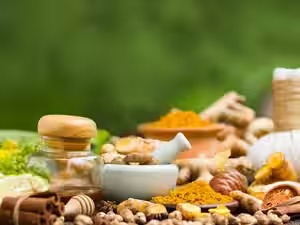
Hyderabad: A microbiological risk assessment by the Indian Council of Medical Research’s National Institute of Nutrition found that a majority of herbal formulations sold in Hyderabad contain bacterial contamination exceeding US Pharmacopoeia’s permissible limits.
The study, led by Surekha Mullapudi Venkata from the Pathology and Microbiology Division of NIN, analysed 170 herbal products and found that 52.4% were non-compliant with the standards. The study revealed that solid herbal formulations recorded the highest contamination levels, with 63.6% of the 110 solid samples exceeding aerobic bacterial limits.
The research was published on August 5 in Science Direct’s Journal of Herbal Medicine under the title “Microbiological Risk Assessment and Safety Evaluation of Widely Used Herbal Pharmaceuticals”. The study found pathogens including Escherichia coli, faecal coliforms, Staphylococcus, Pseudomonas, Salmonella, yeast, and moulds in herbal formulations. Risk assessment using the Risk Ranger tool assigned the highest ranking of 75 to solid drugs, followed by semi-solids and liquids at 72 and 70, respectively.
NIN researchers conducted market surveys across the five zones of Greater Hyderabad Municipal Corporation to identify frequently consumed herbal products. Samples were collected from retail outlets in GHMC area using random sampling and tested according to US-FDA Bacteriological Analytical Manual methods.
Among the 110 solid samples, 96.4% had total viable counts. Viable count is a method used in cell culture to determine the number of living cells in the culture. Staphylococcus, which causes multiple infections in humans, was detected in 62.7%, faecal coliforms in 32.7%, Pseudomonas in 31.8%, E coli in 5.5%, and yeast and moulds in 84.6% of samples. Semi-solid herbal formulations showed 63.3% total viable counts, with Staphylococcus in 30% and yeast and moulds in 23.3%. Liquid herbal drugs had 23.3% total viable counts, with yeast and moulds detected in 10%.
Specific solid products with 100% non-compliance included Ashwagandha powder, Shatavari powder, Shatavari tablet, Brahmi powder, Trikatu powder, Dry ginger powder, and Yashtimadhu powder. Meanwhile, Tanikaya powder, Lodhra bark powder, Triphala powder, Ashwagandha tablet, Amla powder, Triphala tablet, and Karakaya powder showed non-compliance rates for US Pharmacopoeia standards ranging from 25% to 75%.
The scientists warned that consumption of contaminated formulations could cause gastrointestinal illnesses and severe infections. The researchers recommended to the govt to bring in strict regulatory guidelines and quality monitoring in the manufacturing and storage of herbal drugs.