
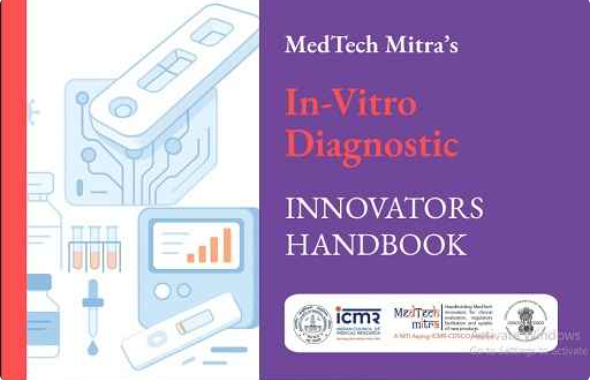
New Delhi: The Central Drugs Standard Control Organisation (CDSCO), in collaboration with Indian Council of Medical Research (ICMR), has released the MedTech Mitra’s handbook for innovators in the in-vitro diagnostics (IVD) medical devices segment, to support stakeholders, especially innovators in navigating the complex requirements associated with development of IVDs.
The handbook consolidates regulatory expectations, best practices, and internationally harmonized standards into a structured format designed to be both informative and actionable, and while it is not legally binding, it is intended to complement the existing regulations under the Medical Devices Rules, 2017 and other applicable frameworks.
India has been promoting indigenous development and manufacturing of medical devices, and programs led by the Indian Council of Medical Research (ICMR), NITI Aayog, and academic institutions such as IITs and AIIMS have created unprecedented opportunities for innovators to access mentorship, funding, validation, and technology transfer support.
“Yet, the true impact of these initiatives depends on how effectively innovators can plan, execute, and scale their ideas ensuring that innovation does not remain confined to laboratories but reaches patients, hospitals, and communities. This MedTech Mitra’s In Vitro Diagnostic Innovators handbook for is a step towards institutionalizing that process,” said Dr Vinod K Paul, member, NITI Aayog.
Organized into six comprehensive chapters, the workbook provides a structured roadmap for innovators, from identifying unmet clinical needs to developing, validating, and commercializing their technologies. It encourages innovators to think holistically, integrating scientific rigor with regulatory preparedness, quality systems, and market readiness, he added.
The journey from laboratory discovery to patient care requires systematic planning, collaboration, and adherence to defined standards. Innovators and researchers must work closely with clinicians, hospitals, and industry partners to design and execute validation studies that reflect real-world clinical conditions. This evidence-based approach is crucial for building trust among healthcare professionals, regulatory authorities, and patients, said Dr Rajiv Bahl, secretary, Department of Health Research and Director General of ICMR.
“This MedTech Mitra’s In Vitro Diagnostic Innovators Handbook developed jointly by ICMR and CDSCO (IVD Division) provides a structured pathway to help innovators understand and plan their clinical validation strategies effectively. By mapping key milestones and expectations across the innovation lifecycle, the workbook enables researchers to anticipate requirements, align with regulatory and ethical norms, and generate robust clinical evidence to support their product’s safety and efficacy,” said Bahl.
India’s regulatory framework for medical devices has undergone significant strengthening and harmonisation in the recent past and to translate innovation into market-ready products efficiently, innovators must understand, anticipate and incorporate regulatory requirements at every stage from design and development to validation, manufacturing and commercialisation, said Dr Rajeev Singh Raghuvanshi, Drugs Controller General of India.
“Planning regulatory implementation early in the innovation cycle ensures that time-to-market is optimised and compliance gaps are minimised. This proactive approach transforms regulation from a perceived barrier into a strategic enabler of innovation,” he added.
The workbook provides a structured, time-based framework to help innovators identify key regulatory milestones, documentation requirements, and quality management expectations across the product lifecycle, said the regulator.
A key feature of the handbook is the inclusion of To Do Lists at the end of each chapter, designed to support developers in understanding and fulfilling regulatory expectations. These To Do Lists provide a step-by-step breakdown of critical aspects such as device classification, performance evaluation, risk assessment, quality management system (QMS) compliance, and post-market surveillance.
By following these structured guidelines, manufacturers can ensure that their IVD meets the required safety, efficacy, and quality standards mandated by regulatory authorities, say the authorities.
Launched on December 25, 2023, jointly by ICMR and CDSCO under the guidance of NITI Aayog, the MedTech Mitra initiative aims to empower MedTech innovators and advance healthcare solutions by providing crucial support for clinical evaluation, regulatory facilitation, and the uptake of new products.





%20In%20Drug%20Development)