Chirag Paswan says India working with global bodies on nutraceutical regulations

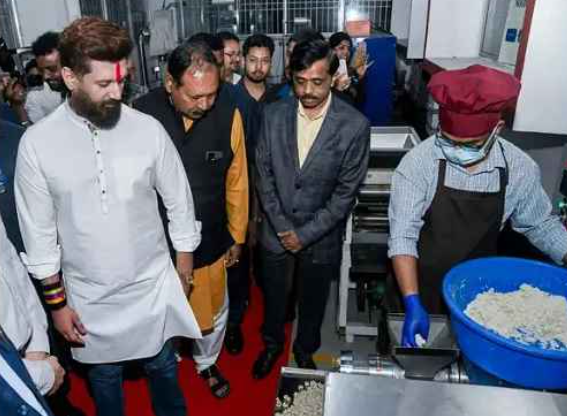
New Delhi: India is working with global regulatory bodies, like Codex Alimentarius Commission, to formulate regulations for the nutraceutical industry, which has huge growth potential, Food Processing Industries Minister Chirag Paswan said on Tuesday.

“Nutraceuticals are again one of the fastest-growing industries. When it comes to this particular sector, we need to have regulations in place,” Paswan told reporters on the sidelines of an Assocham event.

“We are working closely with international regulatory bodies like Codex to have formal regulations so that the industry can grow.”

The scope of this industry is massive, and since it is new, numerous reforms and policies need to be implemented, for which the government is currently in the process, he added.

Paswan, addressing the event, noted that the government is ready to address the gaps in the sector and urged stakeholders to suggest policy reforms.

He said the government is focusing on nutritional security, alongside food security.

India’s nutraceutical industry is experiencing rapid growth, fuelled by rising health awareness and preventive healthcare trends.

Nutraceuticals fall primarily under the Food Safety and Standards Authority of India (FSSAI) via the Food Safety and Standards Act, 2006. Core rules include FSS (Health Supplements, Nutraceuticals, etc.) Regulations, 2016, covering licensing, labelling, advertising claims, and contaminants.

Food business operators need FSSAI licenses for manufacturing and sales. Labelling must detail purpose, target groups, usage instructions, and precautions; no genetically modified ingredients are permitted currently.


Related Posts

AIIA organises public awareness rally on 11th Ayurveda Day

The All India Institute of Ayurveda (AIIA), New Delhi, an autonomous organisation under the Ministry of Ayush, Government of India, organised an “Ayurveda Public Awareness Rally” today to mark the…

UKHSA and University of Oxford scientists uncover genetic changes in the bacteria causing severe Kent meningococcal disease outbreak

Scientists from UKHSA, the University of Oxford and a collaboration of academic institutions have used bacterial genome sequencing to understand why the meningococcal disease outbreak in Kent earlier this year…

Leave a Reply

Your email address will not be published. Required fields are marked *

You Missed

AIIA organises public awareness rally on 11th Ayurveda Day

AIIA organises public awareness rally on 11th Ayurveda Day

UKHSA and University of Oxford scientists uncover genetic changes in the bacteria causing severe Kent meningococcal disease outbreak

UKHSA and University of Oxford scientists uncover genetic changes in the bacteria causing severe Kent meningococcal disease outbreak

‘Broad daylight dacoity’, says Supreme Court on overpricing of essential cancer drugs

‘Broad daylight dacoity’, says Supreme Court on overpricing of essential cancer drugs

CDSCO finds one spurious drug sample in Delhi, 220 NSQs in Aug surveillance

CDSCO finds one spurious drug sample in Delhi, 220 NSQs in Aug surveillance

FSDA cancels 16 pharmacy licences, suspends 8, including Pfizer depot

FSDA cancels 16 pharmacy licences, suspends 8, including Pfizer depot

Excellence of Accredited Hospitals to be judged on how Friendly they are with Patients

Excellence of Accredited Hospitals to be judged on how Friendly they are with Patients