New Delhi: The Ministry of AYUSH has detailed its regulatory framework and ongoing initiatives to monitor heavy metal content in traditional medicines, responding to parliamentary concerns over quality and safety of Ayurveda, Siddha, Unani and Homoeopathy (ASU&H) drugs.
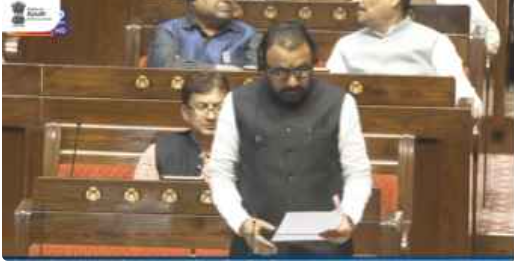
In a written reply to Unstarred Question No. 3532 in the Rajya Sabha on March 24, 2026, Minister of State (Independent Charge) for AYUSH, Shri Prataprao Jadhav, addressed queries raised by Dr. Fauzia Khan. The question referenced the 156th Report of the Department-related Standing Committee on Health and Family Welfare (2024), which had flagged high metal contents in AYUSH drugs and called for stronger post-marketing surveillance.
The government stated that it has implemented several measures under the Central Sector Scheme “Ayush Oushadhi Gunvatta evam Uttpadan Samvardhan Yojana” (AOGUSY). These include a dedicated Pharmacovigilance Programme for ASU&H drugs that captures suspected Adverse Drug Reactions (ADRs) and forwards them to State/UT Licensing Authorities for action. On 30 May 2025, the Ministry launched the “Ayush Suraksha” IT-enabled online portal for real-time ADR reporting, with a centralised dashboard for tracking and analysis. The portal integrates with the National Pharmacovigilance Programme and routes complaints to multiple authorities including State Licensing Bodies, the Central Consumer Protection Authority and others.
Quality control enforcement rests with State Drug Controllers under the Drugs and Cosmetics Act, 1940 and Rules, 1945. Manufacturers must follow Good Manufacturing Practices (Schedule T and M-I), adhere to pharmacopoeial standards, and obtain licences only after proving safety and effectiveness. The Pharmacopoeia Commission for Indian Medicine & Homoeopathy (PCIM&H) has published 2,325 quality standards for raw materials, 426 for ASU formulations and 2,799 formulary specifications; it also functions as the Central Drugs Laboratory for testing. Drug Inspectors routinely collect samples from manufacturers and markets for analysis in State Drug Testing Laboratories.
On laboratory infrastructure, the AOGUSY scheme supports upgradation of AYUSH pharmacies and drug-testing labs to WHO-GMP and NABL accreditation standards. As of now, 108 laboratories are approved under the Drugs Rules for testing ASU drugs, while 34 State/UT Drug Testing Laboratories handle quality checks, including heavy metal limits.
Crucially, the Minister informed the House that “no State/UT Licensing Authorities reported instances of exceeding Food and Agriculture Organization (FAO)/World Health Organization (WHO) limits” for heavy metals. Legal provisions under Sections 33EEB, 33EEC and 33I of the Drugs and Cosmetics Act provide for penalties, licence suspension, product recalls and prosecution in case of violations. A three-tier pharmacovigilance network—comprising one National, five Intermediate and 97 Peripheral centres—is operational, with the All India Institute of Ayurveda, New Delhi, serving as the National Pharmacovigilance Coordination Centre.
The government’s statement comes against the backdrop of a decades-old debate on heavy metal contamination in certain Ayurvedic and herbal formulations. A study published in Frontiers in Gastroenterology and reported by India Today on 11 March 2026 analysed 386 alternative medicine products consumed by 91 patients at a specialised liver centre in Kerala (2021-2023). Laboratory testing revealed heavy metals exceeding WHO safety limits in a significant proportion: mercury in 34% of samples (some at extremely high levels), cadmium in 25%, arsenic in 21% and lead in 14%. Cadmium exposure was most strongly linked to acute-on-chronic liver failure (76% vs 23% in unexposed cases). The study also found undisclosed pharmaceutical adulterants in 28% of products and unlabeled animal-derived ingredients in 31%. Unlabeled remedies were associated with markedly higher mortality (43% for those consuming three or more vs 14% overall).
Lead author Arif Hussain and co-author Dr. Cyriac Abby Philips (a hepatologist) attributed the risks primarily to manufacturing lapses, poor labelling and supply-chain gaps rather than the traditional systems per se. Experts from the AYUSH sector, including former All India Institute of Ayurveda director Tanuja Nesari and Apollo AyurVAID’s Sreejith Edamana, have echoed that the problem lies in regulation and misuse, not the medicines themselves, while cautioning against blind assumptions of safety simply because products are labelled “natural”.
AYUSH practitioners have historically defended traditional medicines and at times criticised allopathic alternatives when safety issues surface in herbal products. The government’s latest reply emphasises that routine official sampling and testing have not flagged violations, even as independent clinical studies continue to highlight real-world risks in certain market products.
The Ministry maintains that its pharmacovigilance and quality-control ecosystem, combined with legal enforcement at the state level, provides adequate safeguards, while committing to further strengthening of testing facilities and consumer protection mechanisms.
References
Rajya Sabha Unstarred Question No. 3532 (answered 24 March 2026), Ministry of AYUSH, Government of India. https://sansad.in/getFile/annex/270/AU3532_iqEGDF.pdf?source=pqars
“Hidden toxins in ‘natural’ remedies linked to severe liver failure: Study,” India Today, 11 March 2026. https://www.indiatoday.in/health/story/hidden-toxins-in-natural-remedies-linked-to-severe-liver-failure-study-2880485-2026-03-11
Acknowledgements: This news draft is prepared exclusively from the official parliamentary record and the cited media report, with direct attribution to both primary sources.