
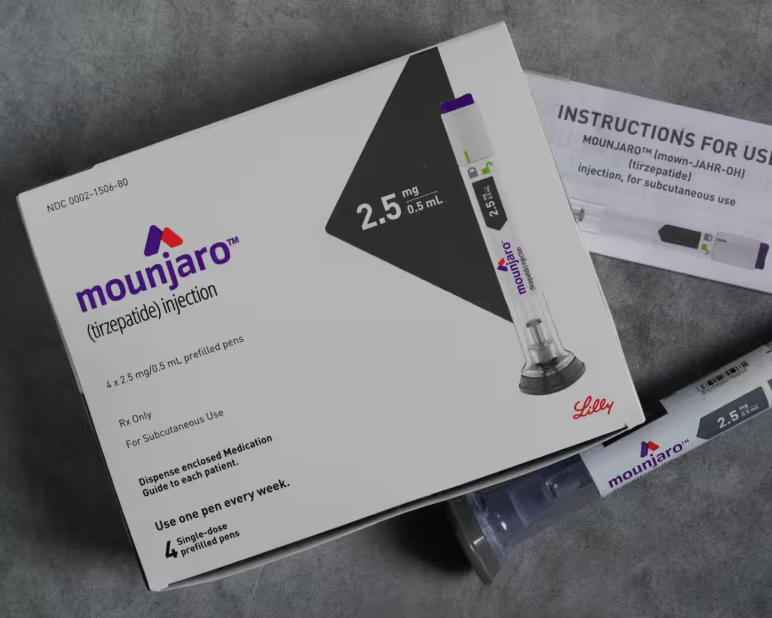
Hundreds of people have reported problems with their pancreas linked to taking weight loss and diabetes injections, prompting health officials to launch a study into side-effects.
Some cases of pancreatitis reported to be linked to GLP-1 medicines (glucagon-like peptide-1 receptor agonists) have been fatal.
The move comes after an increase in reports of acute pancreatitis to the Medicines and Healthcare products Regulatory Agency’s (MHRA) Yellow Card scheme, which monitors any adverse reactions to medications and medical devices in the UK.
Acute pancreatitis is a sudden inflammation of the pancreas, a gland located behind the stomach that aids in digestion. It often requires hospital admission. Symptoms include severe pain in the abdomen, nausea and fever.
Patient information leaflets for GLP-1 medications list pancreatitis as an “uncommon” reaction, affecting around one in 100 patients. To date, the scheme has received nearly 400 reports of acute pancreatitis from patients who have used Mounjaro, Wegovy, Ozempic and liraglutide, with nearly half (181) involving tirzepatide (Mounjaro).
More than one quarter of these cases have been reported in 2025. Since the beginning of the year, there have been 22 reports of acute pancreatitis after taking semaglutide (Ozempic and Wegovy), and 101 after taking tirzepatide (Mounjaro) to the Yellow Card scheme.
An MHRA spokesperson said: “Alongside increased usage, we are seeing an upturn in the number of Yellow Card reports mentioning GLP-1 medicines and acute pancreatitis.”
Due to the impact of this serious disease on patients, the MHRA said it wanted to understand whether there were any genetic factors at play. It has encouraged anyone hospitalised with acute pancreatitis suspected to be related to taking these drugs to report it to the Yellow Card scheme. Health professionals are also urged to report to the scheme on behalf of their patients.
The MHRA will then invite those patients to take part in the Yellow Card Biobank study, run by Genomics England. Participants will be asked to provide further information, alongside a saliva sample, which will be analysed by scientists.
Although there is no known genetic link that increases the risk of acute pancreatitis while taking GLP-1 medicines, the MHRA said: “Sometimes genes can influence the side-effects an individual experiences when taking a medicine, so in the context of the increasing usage of these medicines and the reports of acute pancreatitis we have received, we are exploring this further.”
Studies have shown that adverse reactions to medication account for one in six hospital admissions.
Dr Alison Cave, the MHRA’s chief safety officer, said: “Evidence shows that almost a third of side-effects to medicines could be prevented with the introduction of genetic testing. It is predicted that adverse drug reactions cost the NHS more than £2.2bn a year in hospital stays alone.”
A spokesperson for Lilly, the maker of Mounjaro, said: “Patient safety is Lilly’s top priority.
“We take reports regarding patient safety seriously and actively monitor, evaluate and report safety information for all our medicines. Adverse events should be reported under the MHRA’s Yellow Card scheme, but may be caused by other factors, including pre-existing conditions.
“The Mounjaro (tirzepatide) patient information leaflet warns that inflamed pancreas (acute pancreatitis) is an uncommon side-effect (which may affect up to 1 in 100 people). It also advises patients to talk to their doctor or other healthcare professional before using Mounjaro if they have ever had pancreatitis.”
A spokesperson for Novo Nordisk UK, which makes Ozempic and Wegovy, said: “Patient safety is of the utmost importance to Novo Nordisk. Like all medications, side effects can occur and vary from patient to patient. The known risks and benefits of GLP1 medicines are described in the summary of product characteristics.
“We recommend that patients take these medications only for their approved indications and under the strict supervision of a healthcare professional, who can also advise on potential side effects.
“We continuously collect safety data on our marketed GLP-1 medicines and work closely with the authorities to ensure patient safety. The benefit-risk profile of our GLP-1 medicines remains positive, and we welcome any new research that will improve our understanding of treatments for people living with chronic diseases.”







%20In%20Drug%20Development)