New Delhi: Roche, a Swiss multinational healthcare company, is seeking a permanent injunction against Natco Pharma to prevent the introduction of a generic version of Risdiplam, a Spinal Muscular Atrophy (SMA) drug, citing patent infringement.
Health groups on Tuesday (November 5, 2024) argued that Roche’s legal action to block generic supply jeopardises public interest by limiting access to affordable medication. Roche’s patent for Risdiplam is effective until 2035, allowing them to charge approximately ₹6 lakh per bottle, while production costs suggest the drug could be made available for as low as ₹3,024 annually.
Roche’s action in Delhi High Court seeking an injunction against Natco Pharma to prevent the introduction of a generic version of the drug called risdiplam will jeopardise public interest by compelling patients to rely on the Roche product that costs ₹6 lakh a month, they said.
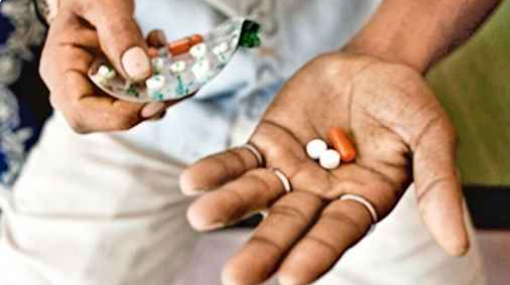
Risdiplam is the first oral medication against SMA, a congenital neuromuscular disorder marked by progressive muscle weakness, loss of movement control, and muscle wasting and classified as a “rare disease”. Roche has a patent on risdiplam in India until 2035.
SMA affects roughly one in 7,700 live births in India.
The Union health ministry had decided in May 2022 to provide ₹50 lakh per patient for the treatment of rare diseases, but patients’ rights advocates argue that inexpensive generic versions will be critical for sustainable government support for treatment.
“Roche’s action against Natco comes at a time when multiple patients with SMA and other rare diseases have approached courts seeking sustainable treatment options,” said Leena Menghaney, a public health lawyer and member of a network campaigning for access to inexpensive medicines.
The network called Working Group on Access to Medicines and Treatments has cited an analysis by Melissa Barbar, a public health researcher at Yale University in the US, which estimated that generic risdiplam could be priced at ₹3,024 per patient per year.
“This includes the cost of production with a 20 per cent markup and 25 per cent tax,” the Working Group said in a statement released on Tuesday. “Risdiplam is less complex to manufacture than other treatments for SMA. Production in small volumes is feasible and cost-effective.”
Provisions in Indian laws on patents allow the Centre to enforce a so-called compulsory licence to enable generic versions of patented molecules if there is a large unmet need, experts say.
And generic drug makers could also challenge already-granted patents seeking invalidation, said Chetali Rao, a member of the Third World Network, a think tank that engages in healthcare and other issues that impact developing countries.
“There is a huge unmet need in the case of risdiplam — the vast majority of patients in India will have no access to a medicine that costs ₹72 lakh a year and that needs to be taken throughout life,” said Rao.
A Roche spokesperson, responding to a query from this newspaper seeking a response to the concerns by patients’ rights groups, said Roche “is committed to deliver healthcare innovations that significantly improve patients’ lives in the country while ensuring that as many patients as possible have access to our products”.
“…We are also committed to protect our innovations within the scope of applicable laws in the countries we operate and believe that laws provide sufficient safeguards for protection of innovation,” the spokesperson said.
Roche, under a patient-support programme announced in 2021, would during the first two years of treatment provide three bottles free for every two bottles bought by the patient. From the third year onwards, the company would provide two bottles free for every one bottle bought by the patient. But, Rao said, the patient-support programme is likely to make little difference to most patients.