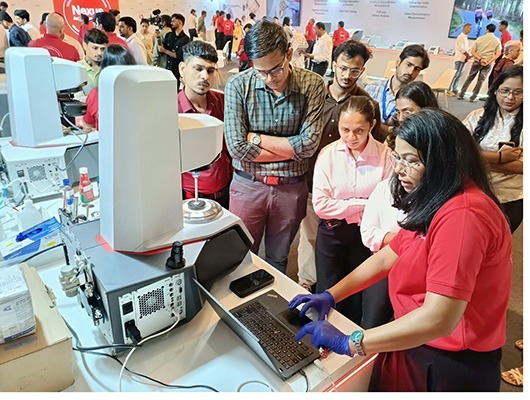
SRINAGAR: The Government of India on Friday informed the Lok Sabha that Jammu and Kashmir has three State Drug Testing Laboratories funded under the centrally sponsored scheme for strengthening the drug regulatory system in the country.
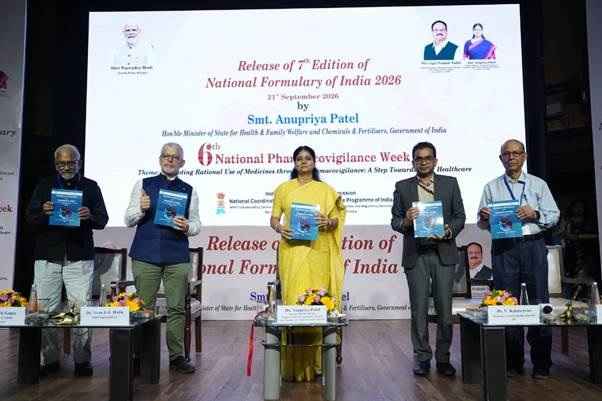
Replying to Unstarred Question No. 2504, Union Minister of State for Health and Family Welfare Anupriya Patel said the Ministry of Health and Family Welfare is implementing the Centrally Sponsored Scheme — Strengthening of States’ Drug Regulatory System (SSDRS) — to upgrade laboratories, set up new drug testing labs and modernize State drug control offices.
The Minister informed that under the SSDRS scheme, funds amounting to Rs 756 crore have been released to States and Union Territories as Central share. So far, 19 new drug testing laboratories have been constructed and 28 existing labs upgraded across the country.
As per the annexure tabled in the House, Jammu and Kashmir has three State Drug Testing Laboratories funded under the scheme. These laboratories function under the administrative control of the UT Government.
The reply further stated that manpower in State drug testing laboratories falls under the jurisdiction of respective State/UT Governments and related data is not maintained centrally. However, in laboratories under the Central Drugs Standard Control Organization (CDSCO), there are 276 sanctioned posts, of which 178 are filled and 98 are vacant. Recruitment is an ongoing process.
Providing nationwide data on drug quality, the Minister said that during 2022-23, as many as 96,713 drug samples were tested across States/UTs, of which 3,053 were declared Not of Standard Quality (NSQ) and 424 were found spurious or adulterated. In 2023-24, 1,06,150 samples were tested with 2,988 declared NSQ and 282 spurious/adulterated. In 2024-25, 1,16,323 samples were tested, 3,104 were declared NSQ and 245 were found spurious or adulterated. Prosecutions were also launched in cases involving manufacturing, sale and distribution of spurious or adulterated drugs.
The government said the SSDRS scheme is aimed at upgrading infrastructure, strengthening regulatory oversight and ensuring quality control to safeguard India’s reputation as a global pharmaceutical supplier.