Gurugram: In a significant advancement in the treatment of late-stage cervical cancer, Medanta Hospital Gurugram has been awarded a patent for the Medanta Anterior Oblique Lateral Oblique (MAOLO) template, an innovative Brachytherapy device. Conceptualized by Dr. Susovan Banerjee, Associate Director, and developed with Dr. Tejinder Kataria, Chairperson of the Division of Radiation Oncology at Medanta, and the Medanta Medical Physics Team, the MAOLO represents a major leap in cervical cancer treatment.
The MAOLO is designed to tackle tumours as large as 100cc (cubic centimeters) and beyond, significantly surpassing the capabilities of commercially available intracavitary applicators, which are typically effective against tumours up to 36cc. This innovation is crucial for India, where cervical cancer is the second most common cancer among women and often presents in late stages with large and bulky tumours.
Despite cervical cancer being 98% preventable with vaccines and PAP smear tests in the pre-disease stage, and 95% treatable in early stages, it claims two-thirds of patients in India due to late-stage presentation. The MAOLO, approved by the Medanta Institutional Review Board and Independent Ethics Committee, is a high-precision, patient-friendly applicator designed to deliver image-guided adaptive Brachytherapy to larger pelvic areas, a feat not possible with current commercially available templates.
Brachytherapy, also known as plesiotherapy, places the radiation source close to the tumour—on the skin’s surface, mucosa, inside tissue, or in cavities. It uses a higher radiation dose to treat a smaller area compared to External Beam Radiation Therapy, which directs high-energy X-rays at tumours from outside the body. Brachytherapy has been effectively used since the 1930s to treat cancers such as oral or tongue cancer, soft tissue sarcomas, and cervical cancer.
Dr. Tejinder Kataria highlighted the limitations of existing interstitial and intracavitary combo applicators, which are bulky, have restricted reach, and require time, training, and skill to assemble. These devices often cause discomfort due to their multiple components and the need for skin stitching, increasing the duration of anaesthesia, pain medication requirements, and hospital stays.
The MAOLO device overcomes these challenges, offering hope to late-stage cervical cancer patients where conventional treatments often fall short. It is especially beneficial for patients at high risk of recurrence in the lateral parametria after completing chemoradiation and conventional Brachytherapy, where surgical or chemotherapy options are ineffective.
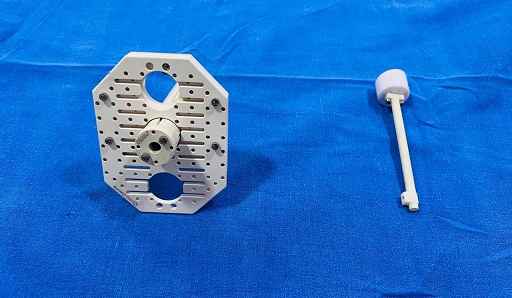
Dr. Susovan Banerjee explained that existing applicators’ bulkiness and inadequate coverage for large tumours led to the need for a new device. The MAOLO is a disk-shaped device allowing for maximum catheter placement in three directions, making it effective against large tumours. Its single-piece design eliminates the need for assembly, reduces the margin for error, and ensures ease of use. The cylindrical shape allows for secure vaginal placement, improving patient comfort and reducing adverse effects like major bleeding, pain, discomfort, or geometrical asymmetry.
Dr. Naresh Trehan, Chairman and Managing Director of Medanta, emphasized the hospital’s dedication to patient well-being and the development of high-quality medical technologies. “The MAOLO template exemplifies our commitment to innovation in healthcare. This patent is a significant step forward for cervical cancer care in India, and we will continue to innovate and provide solutions that cater to the needs of our community.”
Medanta’s achievement in developing and patenting the MAOLO device underscores its commitment to healthcare innovation. The device’s integration of intracavitary and interstitial applications in a single, user-friendly instrument promises to enhance gynaecological Brachytherapy, particularly in resource-limited regions of India. The MAOLO, a product of collaborative efforts, rigorous research, and meticulous testing, marks a milestone in advanced-stage cervical cancer treatment and sets a new standard for patient care in oncology.