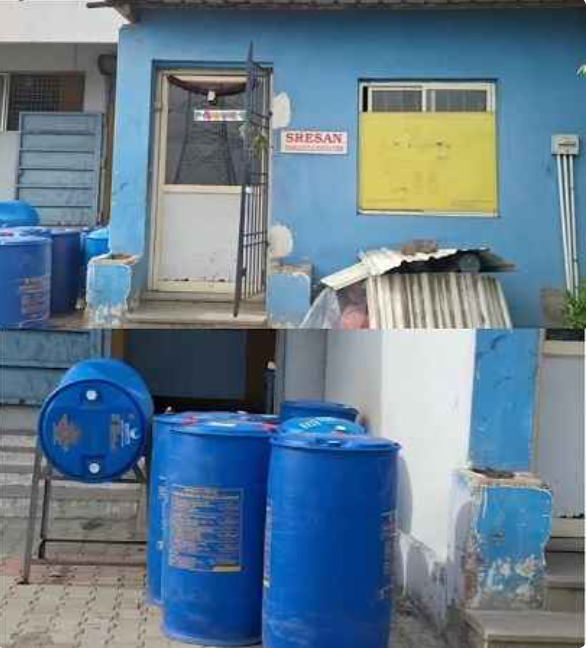
Sunguvarchatram – Inspectors raiding the Sresan Pharmaceuticals unit in Kancheepuram, linked to the deaths of 15 children in Madhya Pradesh, were met with alarming scenes: vats of chemicals boiling on open gas stoves, leaking plastic pipes dripping residue, and rusted equipment scattered around. Workers, unprotected by gloves or masks, haphazardly mixed ingredients, as reported by NDTV.
The Tamil Nadu Drugs Control Department acted on a Madhya Pradesh FDA alert, conducting raids on October 1 and 2, exposing a facility producing the deadly Coldrif cough syrup.
Unsafe Chemical Sourcing
Investigations revealed that Sresan Pharmaceuticals procured industrial-grade chemicals, intended for paints and glues, instead of medical-grade materials. These were purchased in cash and via Google Pay from Chennai-based Sunrise Biotech and Pandia Chemicals, evading documentation. The company also sourced propylene glycol—a critical syrup component—from local chemical and paint traders, bypassing certified suppliers, with no testing for harmful contaminants.
Toxic Ingredients and Negligent Oversight
Analysis showed the propylene glycol contained diethylene glycol, a toxic substance used in brake fluids and lubricants, capable of damaging kidneys, liver, and the nervous system. Kidney tests on the deceased Chhindwara children confirmed high diethylene glycol levels. The implicated Coldrif batch, SR-13, had a staggering 48.6% diethylene glycol—nearly 500 times the safe limit.
The factory lacked any quality control, pharmacovigilance, or monitoring for adverse reactions or recalls, leaving the product’s safety unchecked once distributed.
Extensive Violations
The inspection team documented 39 critical and 325 major breaches under the Drugs and Cosmetics Act, 1940, including no qualified chemists or pharmacists, untested raw materials, impure water from unknown sources, absent ventilation, HEPA filters, pest control, and open drains with filthy equipment. Records, safety logs, and quality checks were also missing, indicating months of unregulated production.
The Fatal Batch
Batch SR-13, manufactured in May 2025 with a validity until April 2027, circulated unnoticed for months, reaching markets in Tamil Nadu, Odisha, and Puducherry. Prescribed in Chhindwara between August and September for fever and cough, it triggered acute kidney failure in children, most under five, leading to 15 deaths.
A senior health official called it a systemic failure—from unverified chemical purchases in Chennai to lax quality control in Kancheepuram and unchecked distribution in Madhya Pradesh.
Aftermath
Tamil Nadu authorities halted Sresan Pharmaceuticals’ production, froze its stock, suspended its license, and issued a show-cause notice. In Madhya Pradesh, two drug inspectors, a deputy director, and the state Drug Controller, Dinesh Maurya, were suspended, while a Chhindwara doctor was arrested for negligence. Chief Minister Mohan Yadav ordered further action to address the crisis.