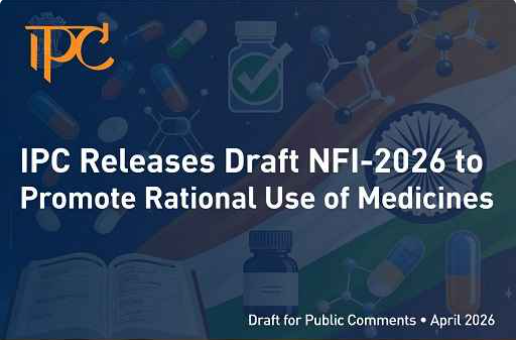
Ghaziabad:- The Indian Pharmacopoeia Commission (IPC) has taken a significant step toward strengthening public health systems with the draft release of the National Formulary of India (NFI) 2026, a comprehensive guidance document aimed at promoting the rational use of medicines and reducing the growing burden of antimicrobial resistance (AMR) in the country.
The draft has been opened for comments from key stakeholders, including doctors, nurses, healthcare professionals, and prescribers, who have been given a 45-day window to provide feedback before its final publication, tentatively scheduled for July 2026.
Setting the tone for this critical initiative, IPC’s secretary-cum-scientific director, Dr V Kalaiselvan, underscored the urgency and national importance of the document. “The NFI 2026 is a vital instrument in guiding the rational use of medicines. It directly aligns with the Prime Minister’s vision of reducing the burden of AMR in the country, which is one of the most pressing healthcare challenges of our time,” he stated.
The NFI is widely regarded as an essential reference for healthcare professionals, offering scientifically validated, evidence-based information on drug usage, dosage regimens, indications, contraindications, and safety considerations. By providing standardized and reliable prescribing information, it plays a crucial role in minimizing medication errors and ensuring that medicines are used judiciously across diverse healthcare settings, from tertiary hospitals to local dispensaries and retail pharmacies.
Expanding on its clinical relevance, Dr Kalaiselvan said, “The NFI is not merely a compilation of drug information; it is a practical, day-to-day guide for prescribers and healthcare providers. Its proper implementation can significantly reduce irrational prescribing practices, which are a major contributor to antimicrobial resistance.”
The issue of AMR has emerged as a serious public health threat globally and in India, driven largely by the overuse and misuse of antibiotics and other medicines. The Government of India has prioritized strategies to tackle AMR, and the NFI stands out as a cornerstone document supporting this policy direction. By encouraging evidence-based prescribing and rational medicine use, the formulary is expected to directly contribute to lowering resistance rates and improving long-term treatment outcomes.
Reiterating IPC’s commitment, Dr Kalaiselvan added, “We are dedicated to ensuring the timely publication of the NFI 2026. This document will serve as a bridge between policy and practice, enabling healthcare professionals to align with national goals while delivering safe and effective patient care.”
In addition to the NFI, the IPC continues to publish the Indian Pharmacopoeia (IP), a legally binding document that defines the official standards for drug quality, purity, and strength in India. Compliance with IP standards is mandatory for pharmaceutical manufacturers, regulatory authorities, and public testing laboratories. While the IP ensures the quality of medicines, the NFI complements it by guiding their appropriate and rational use in clinical practice.
The IPC’s role extends beyond publications. It is actively supporting the government’s Jan Aushadhi programme by promoting the quality use of affordable medicines. This includes capacity-building initiatives, training programmes for pharmacists, and efforts to make the NFI widely accessible across Jan Aushadhi stores nationwide. These measures aim to ensure that cost-effective medicines are not only available but are also used safely and effectively.
With its strong focus on evidence-based practice, policy alignment, and nationwide accessibility, the NFI 2026 is poised to become a transformative document in India’s healthcare landscape. This will further strengthen rational drug use, support frontline healthcare providers, and play a decisive role in the country’s fight against AMR.