
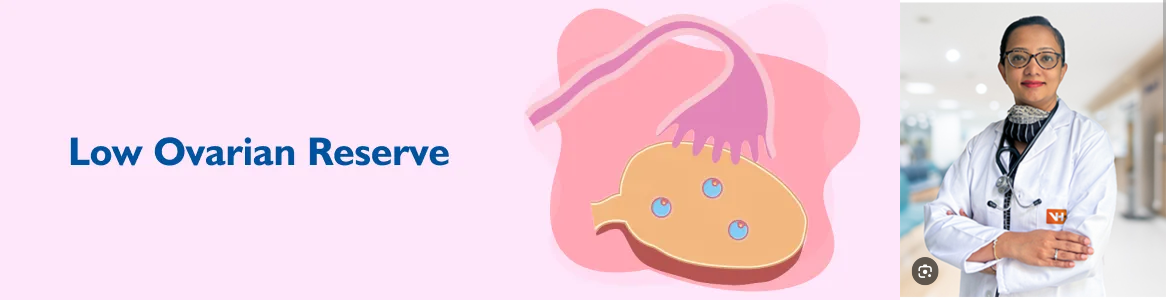
‘SHE’ says- be abreast of Decline in Ovarian Reserve in case planning to delay Pregnancy
 New Delhi: Ovarian reserve in women is a critical factor in the scheme of pregnancy and family making. It has emerged in a study that in Indian women, this reserve is jumping age which means premature ovarian aging is occurring. A renowned Delhi IVF expert says women must be abreast of diminishing egg nest in case they are planning to delay pregnancy. The success of IVF hinges on the state of ovarian reserve in a woman to a great extent. The saving grace is low ovarian reserve does not automatically mean pregnancy is impossible. New advancement in assisted fertility treatments come handy in jumping these hindrances in having bundles of joy
A study, involving 54, 000 women seeking fertility treatment, has picked up the trend of quantity of eggs remaining lower in ovaries than expected for actual chronological age meaning thereby ovary is aging faster than the rest of the body. Data suggests that the issue may be more common than we thought. Out of this number, nearly 29% of women below the age of 30 already had lower than expected AMH levels which is index of the state of reserve.
Dr Kriti Tiwari, Chief IVF Specialist, SHE Delhi Hospital here has given a low- down on nuances of ovarian reserve and its criticality in fertility. Reciting the study, Dr Kirti says that ovarian ageing may be occurring earlier in some Indian women than previously thought. PubMed Central’s official website published the study. Delaying pregnancy being more common these days, Dr Kirti avers women should be aware of low ovarian reserve before making decision about delaying pregnancy. Down below are his thoughts on this phenomenon and facts.
Education, career and feeling of not being ready for motherhood in their twenties are the major factors of delaying pregnancy. This is not unusual, but women should be aware of one thing before making such decisions: low ovarian reserve.
This condition is not often talked about, yet specialists say it can have a significant impact on future family planning. Dr. Kirti Tiwari, says, “Low ovarian reserve means fewer eggs left in the ovaries than expected for your age. It does not always mean you cannot get pregnant, but chances can be lower.”
She explained, “Every woman is born with a fixed number of eggs. Unlike many other cells in the body, eggs cannot be replenished. As age increases, both the number and quality of eggs naturally decline. This decline can happen earlier than expected for some women.”
Dr. Kirti Tiwari said that many women have no obvious symptoms in the beginning. Irregular periods and problems conceiving may be signs of low ovarian count. Doctors usually assess ovarian reserve through blood tests and ultrasound scans. One of the most commonly used tests measures Anti-Müllerian Hormone (AMH). This hormone helps estimate the remaining egg reserve. Ultrasound scans are also used to count small follicles in the ovaries.
Talking about reasons behind declining ovarian reserve, she said, “Age remains the biggest factor. Fertility starts gradually declining after age of 30 and drops more rapidly in the mid-to-late thirties. Also, genetics, surgery, illness and some treatments can reduce reserve. Medical conditions such as endometriosis, ovarian surgery, chemotherapy and certain autoimmune disorders may affect egg reserve.”
What happens if a woman has low ovarian reserve? On this question, Dr Tiwari answered, “A low ovarian reserve does not automatically mean pregnancy is impossible. Many women conceive naturally. Others may need fertility treatment. The key is knowing where things stand and planning accordingly. Early diagnosis helps with planning fertility options. Options include trying sooner or maybe egg preservation. For women considering a delay in pregnancy, fertility preservation may become part of the discussion. ”
She also talked about lifestyle and emotional support. She explained, “Diet and number of eggs are not related directly. But healthy lifestyle choices like a balanced diet, not smoking, and maintaining a healthy weight may improve overall fertility. The emotional side of the issue should also not be ignored. Having low ovarian reserve can be stressful. In such situation emotional support and counselling are important. Ultimately, awareness is the biggest tool.”







%20raises%20hopes%20of%20Effective%20Regulation%20&%20Patient%20Safety)
