New Delhi: The Indian government has set a minimum import price (MIP) for certain key pharmaceutical inputs to combat aggressive undercutting and dumping from Chinese manufacturers.
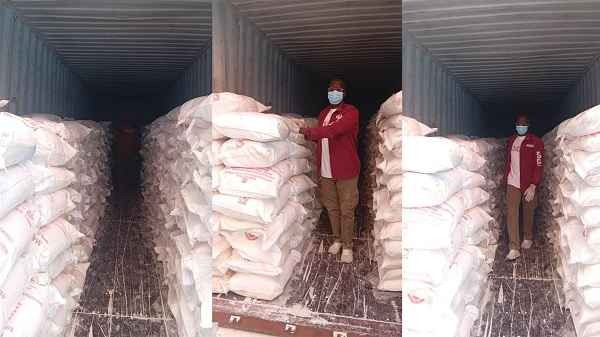
The government imposed the floor price restrictions on import of potassium clavulanate, and some intermediates used for the manufacturing of clavulanic acid and potassium clavulanate. Potassium clavulanate is used by the pharmaceutical industry in manufacturing drugs to treat bacterial infections.
According to a Directorate General of Foreign Trade (DGFT) notification, the import price of diluted potassium clavulanate or its derivatives is fixed at $180 per KGA. For ATS-8, the imported price is fixed at $111 per kg. ATS-8 is a crucial intermediate used in the synthesis of atorvastatin calcium, a widely prescribed statin for lowering cholesterol levels.
The price restrictions will be in place till November 30, 2026, according to the recent notification seen by ET. Henceforth, the import of these raw materials such as bulk drugs or active pharmaceutical ingredients (APIs) will not be allowed below the MIP. However, several pharma industry experts have raised concerns over the government’s move to set minimum import prices (MIP), arguing this will artificially raise the cost for manufacturers of both active pharmaceutical ingredients (API) and formulations in India, and lead to an increase in medicine prices for patients.
“This price setting decision for clavulanic will be counter-productive since formulation companies were earlier buying the same at $140 per kg. The decision is not based on ground facts,” an industry source said. “This is a desperate effort to save companies that have taken the benefit of the government’s PLI scheme,” the person added, noting the concept of setting a floor price can work only if the entire domestic demand is catered by indigenous suppliers and there is no need of imports, which is not the case here.
In November, an MIP of ₹1,174 per kg was announced for sulphadiazine to be effective till September 30 next year. In 2020, the government launched a production-linked incentive (PLI) scheme to draw investments in the manufacturing of critical raw material from the domestic players to reduce the country’s dependence on China and bring pricing stability. However, the Chinese started cutting prices further, putting at risk huge investments made by the PLI beneficiaries.
Industry insiders add that using MIP is clearly a protectionist tool for PLI beneficiaries and goes beyond the scope of the scheme.