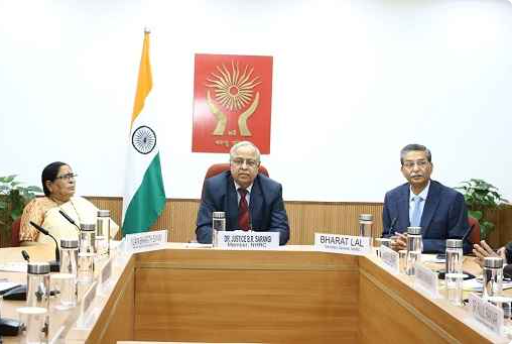
Concerned over the widely used life-saving beta blocker drugs causing adverse drug reactions, the government’s Indian Pharmacopoeia Commission (IPC) has issued an alert about the same.
An adverse drug reaction (ADR) is a harmful, unintended result caused by taking medication. ADRs may occur following a single dose or prolonged administration of a drug or may result from the combination of two or more drugs.
This is important as doctors widely prescribe the beta blocker medication to manage abnormal heart rhythms, prevent heart attack and migraine.
During a recently conducted analysis of Adverse Drug Reactions (ADRs), the commission found that the use of drugs such as metoprolol, propranolol, and atenolol can cause “Hypokalaemia”—a life-threatening condition due to potassium deficiency in the body.
Medically, the drugs metoprolol, propranolol and atenolol are used to treat hypertension in adults, functional heart disorders, migraine prophylaxis, cardiac arrhythmias, management of angina; essential and renal hypertension and other heart disorders.
“The analysis of adverse drug reactions from Pharmacovigilance Programme of India (PvPI) database revealed that beta blocker drugs (Metoprolol, Propranolol, and Atenolol) to cause adverse drug reaction,” stated IPC’s drug safety alert reviewed by Mint.
India’s beta-blocker market is currently valued at $11.06 billion and is expected to touch $15.08 billion by 2030.
India is one of the largest producers of quality medicines and has a robust pharmacovigilance system to monitor the safety profile of marketed pharmaceutical products.
“Healthcare professionals, patients or consumers are advised to closely monitor the possibility of the above ADR associated with the use of above suspected drug. If such a reaction is encountered, please report to the IPC,” it said.
IPC monitors adverse drug reactions among Indian population and helps the Central Drugs Standard Control Organization (CDSCO) take regulatory decisions for the safe use of medicines.
From March till December, around 13 different drugs were found to be showing adverse drug reaction as declared by IPC.