
Hyderabad: Identifying the quality of medicinal plants used in Ayurvedic medicines has always remained a challenge, especially in preventing adulteration. While it is possible to identify plants to some extent by their appearance, the task becomes extremely difficult when the raw material is in powdered form or consists only of roots.
To address this issue, scientists at the Centre for Cellular and Molecular Biology (CSIR-CCMB) in Hyderabad have developed a solution using DNA barcoding technology through which medicinal plants can be identified with high accuracy. DNA barcoding is a scientific method that identifies species using a small segment of DNA present in living organisms.
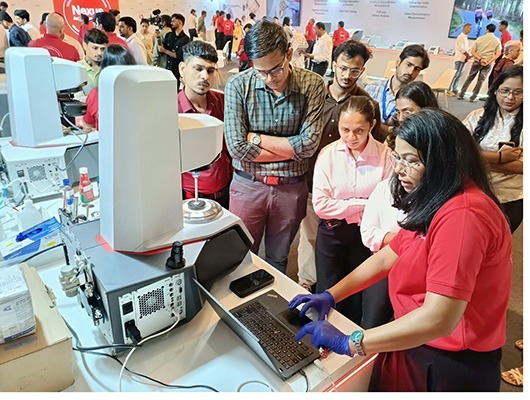
Although this technique is used widely, plant identification through DNA barcoding is more complex compared to animals. To overcome the challenge, CCMB scientists have developed a special DNA barcode system specifically designed for plants. As part of the initiative, CCMB is currently training Ayurvedic practitioners and experts in using this advanced technology. The initiative was conducted under the aegis of the Union Ministry of AYUSH and the Rashtriya Ayurveda Vidyapeeth.
The process begins with isolating DNA from the medicinal plant sample, which is then amplified using Polymerase Chain Reaction (PCR) technology. Following this, DNA sequencing is carried out to analyse the plant genome. Based on this analysis, a unique DNA barcode is generated for each plant species, providing a precise digital identity.
The barcode data is stored in a database, where special software analyses the information. This enables scientists and experts to accurately determine whether a medicinal plant is genuine or adulterated. CCMB scientists believe this technology will play a crucial role in ensuring the purity, quality, and safety of medicinal plants used in Ayurvedic formulations, thereby strengthening trust in traditional medicine systems.