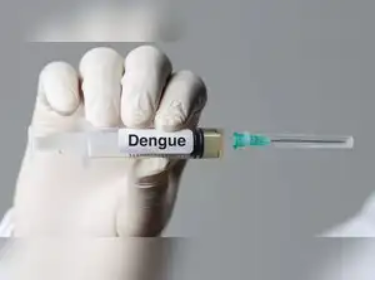
India could receive the dengue vaccine as early as next year. According to a report by the Times of India, Japanese pharmaceutical giant Takeda is planning to launch its dengue vaccine, Qdenga, in India next year. Takeda is collaborating with Hyderabad-based Biological E (Bio E) to bring the vaccine to the market.
Derek Wallace, president of Takeda’s Global Vaccine Business Unit, told TOI that the $23 billion company will adopt a “tiered pricing model for its first global vaccine to maximize access.”
Currently, clinical trials for the vaccine are underway, with Takeda expecting to secure a license for Qdenga in India by 2026. The company has already submitted a comprehensive data package to support the vaccine’s registration in 40 countries.
Takeda plans to introduce the vaccine in both private and public sectors simultaneously. While the vaccine will initially target the pediatric population in line with India’s National Immunization Program, it will also be available to adults in the private sector, Wallace explained.
Qdenga is a tetravalent live-attenuated vaccine targeting all four dengue serotypes. It requires a two-dose regimen with a three-month interval. Since its global launch in 2023, over 10 million doses have been sold worldwide.
Takeda’s collaboration with Bio E is essential for local vaccine production in India, as dengue impacts half of the world’s population. “Our goal is to produce 100 million doses annually by the end of the decade, with Bio E contributing half of that,” Wallace said. Bio E will also serve as Takeda’s exclusive manufacturer for multi-dose vials, which are preferred in public health programs due to their cost-effectiveness, optimized storage, and simplified distribution.
While Takeda’s German facility currently manufactures single-dose vials, Bio E will produce both single and multi-dose formats in India. Takeda’s long-term goal is to establish a complete vaccine production value chain in India, with plans to manufacture 100% of the doses locally in phases.
Over the past two decades, dengue cases have increased eightfold due to factors like climate change, urbanization, and globalization. Last year, India reported nearly 300,000 dengue cases. Before launching the vaccine in India, Takeda is focused on building trust with government stakeholders and establishing public-private partnerships to ensure broad vaccine access. Wallace emphasized the importance of understanding public health program roadmaps and generating the necessary data to support these initiatives.
Takeda’s research into a dengue vaccine dates back to the 1980s, with initial studies in Thailand and later collaboration with the U.S. Centers for Disease Control and Prevention (CDC). In 2012, the company conducted the TIDES study, one of its largest global trials, involving 20,000 children across eight dengue-endemic countries.
In addition to its work on dengue, Takeda has a strong history of producing childhood vaccines, including MMR (measles, mumps, rubella), and has agreements with the Japanese government for pandemic flu preparedness. The company has also contributed to global COVID-19 vaccination efforts by distributing Moderna’s vaccine and manufacturing Novavax’s vaccine.