Mumbai: Cancer patients and their caretakers in India often spend long, arduous hours in hospitals for conventional treatment.
But now with the launch of the world’s first subcutaneous or under-the-skin immunotherapy for lung cancer on Thursday, treatment is available in approximately seven minutes.
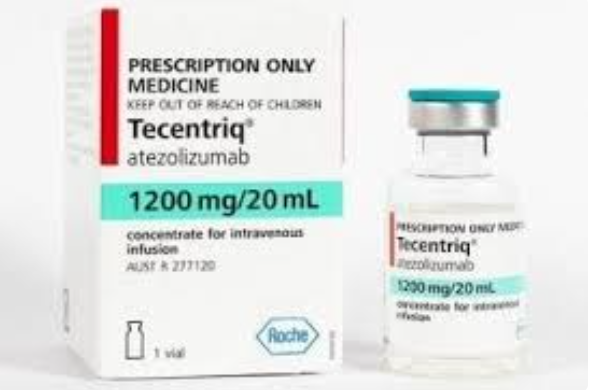
Launched by Swiss pharma giant Roche on Thursday, Tecentriq SC (atezolizumab), a breakthrough innovation, promises to dramatically improve the cancer treatment experience of patients, reduce treatment time by 80 per cent, lower indirect treatment costs, minimise the need to travel long distances, and enable caregivers to spend less time in hospitals.
Approved by the Drugs Controller General of India (DCGI) three months ago for treating patients with adjuvant and metastatic Lung Cancer (NSCLC), it costs Rs. 3.7 lakh per dose, given once in a 21-day cycle. The drug is also available to CGHS cardholders.
Lung cancer is among the most common cancers in India, with about 80,000 people detected annually.
Driven heavily by smoking, especially beedis and air pollution, it is the most common cancer among Indian males and a leading cause of cancer-related mortality, with 80-90 per cent of patients diagnosed with it at advanced stages.
Roche Pharma India Chief Medical Officer Dr Sivabalan Sivanesan said, “Cancer care is evolving beyond survival outcomes alone towards approaches that also prioritise patient experience, convenience and quality of life.”
“With Tecentriq SC, we are bringing an innovation that meaningfully reduces treatment time while maintaining the established efficacy and safety profile of Tecentriq. We believe such advances can play an important role in enabling more patient-centric and future-ready cancer care delivery in India.”
Dr Sajjan Rajpurohit, Director and Head of Medical Oncology at Medanta, said, “Immunotherapy has transformed the treatment landscape for people living with cancer, but conventional IV administration can be long and arduous for patients while also placing significant pressure on tertiary care hospitals. Repeated hospital visits and long treatment hours add to the emotional and physical burden of cancer care. Subcutaneous administration can allow patients to be treated much more quickly and easily, improving their overall treatment experience while reducing waiting times and treatment delays.”
Approved in 85 countries, Tecentriq SC has benefited 10,000 patients globally. It has the potential to treat up to five patients in the time required to treat one patient via intravenous infusion, helping optimise healthcare resources.
Dr Rajpurohit said the drug can be used as a monotherapy (chemotherapy-free) in eligible adults with adjuvant and metastatic NSCLC.
“We have been using the drug in our hospital since February. It has reduced both mental and physical pain for our patients. Subcutaneous delivery reduces pain, is effective, and has fewer side effects. We are moving away from more and more invasive ways to use more comfortable, more accurate ways to either diagnose or treat our patients,” he added.
Dr Amit Rauthan, Consultant and HOD of Medical Oncology at Manipal Hospital, Bangalore, said, “India’s growing cancer burden requires us to rethink how cancer care is delivered. Innovations such as subcutaneous immunotherapy have the potential to simplify treatment administration, reduce pressure on hospital beds and support more decentralised models of care beyond large metro hospitals. Shorter administration formats can help improve accessibility and make cancer care more practical for patients and healthcare systems alike.”
He further said that the entire process of receiving immunotherapy was very cumbersome for patients. “But now with this innovation, things have changed. From the patient’s point of view, they now have to go to an infusion chair, take their dose, and then they are fit to go back home. Not like earlier times when they had to spend hours getting their treatment.”
“From an oncologist’s perspective, it’s again very useful. In our setups, we have limited daycare beds. Sometimes we have to rush through multiple shifts: patients come in the morning, go through treatment, and when they finish, the next patient is taken in. We run through beds because many of these drips and infusions of immunotherapy take a long time. So having a subcutaneous injection for us is a boon because patients can take it up very quickly and finish their treatment fast, and we save the chair time or bed time,” he added.
“This drug is a win-win for the patient, doctor, hospitals, and various therapy centres. It will have a major impact on most patients’ lives,” he added.