Chandigarh: A recent study published in Chandigarh revealed concerning levels of typhoid fever. A significant finding was the increasing ineffectiveness of ciprofloxacin, a standard antibiotic used for typhoid treatment.
The causative organism, Salmonella Typhi, demonstrated total resistance to ciprofloxacin, presumably due to excessive antibiotic usage. Nevertheless, the bacteria remained treatable with ceftriaxone as an alternative option. The study attributed a possible cause of such resistance against the first line of drugs due to overuse of fluoroquinolones over the last decade.
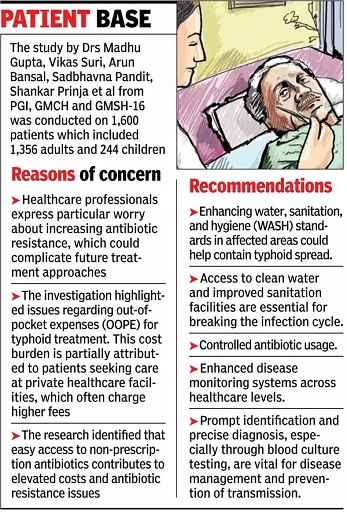
The study ‘Incidence, antimicrobial susceptibility & out of pocket expenditure of severe enteric fever in Chandigarh, north India’ by Drs Madhu Gupta, Vikas Suri, Arun Bansal, Sadbhavna Pandit, Shankar Prinja et al from PGI, GMCH and GMSH-16 has been published in the ‘Indian Journal of Medical Research’. It was conducted on 1,600 patients which included 1,356 adults and 244 children.
The research indicated that 227 individuals per 1 lakh were diagnosed with typhoid, which aligned with global health statistics but remains worrying for the area. Researchers note that inadequate sanitary facilities in these semi-urban localities facilitate disease transmission, increasing the risk of infection through contaminated water and food sources.
Healthcare professionals express particular worry about increasing antibiotic resistance, which could complicate future treatment approaches. The investigation highlighted issues regarding out-of-pocket expenses (OOPE) for typhoid treatment. This cost burden is partially attributed to patients seeking care at private healthcare facilities, which often charge higher fees. Additionally, the research identified that easy access to non-prescription antibiotics contributes to elevated costs and antibiotic resistance issues.
The OOPE due to hospitalization of individuals infected with S. Paratyphi was Rs 8,696.6 was significantly higher than the individuals infected with S. Typhi (Rs 7309) and among cases who were hospitalised for more than seven days as compared with those with a stay of 3-7 days.
Healthcare specialists are advocating for swift intervention to tackle the typhoid situation in Chandigarh. A primary suggestion includes implementing the typhoid conjugate vaccine, which has demonstrated effectiveness in reducing illness and mortality rates.