Co-lead researcher Professor Charlotte Conn, a biophysical chemist from RMIT University, said protein drugs had proven challenging to deliver orally as the drug degrade very quickly in the stomach – until now.
“These types of drugs are typically administered with an injection – thousands of diabetics in Australia need insulin injections up to several times a day, which can be unpleasant for the patient and results in high healthcare costs,” said Conn, from the School of Science.
She said the new technology could also be used to deliver other protein drugs orally – including a new type of oral antibiotic developed by the RMIT team that can avoid resistance by dangerous superbugs.
“Other protein drugs such as monoclonal antibodies have been developed to treat inflammatory conditions, cancer and other diseases with a projected market value of about $400 billion by 2030,” Conn said.
An international patent application has been filed for RMIT’s technology.
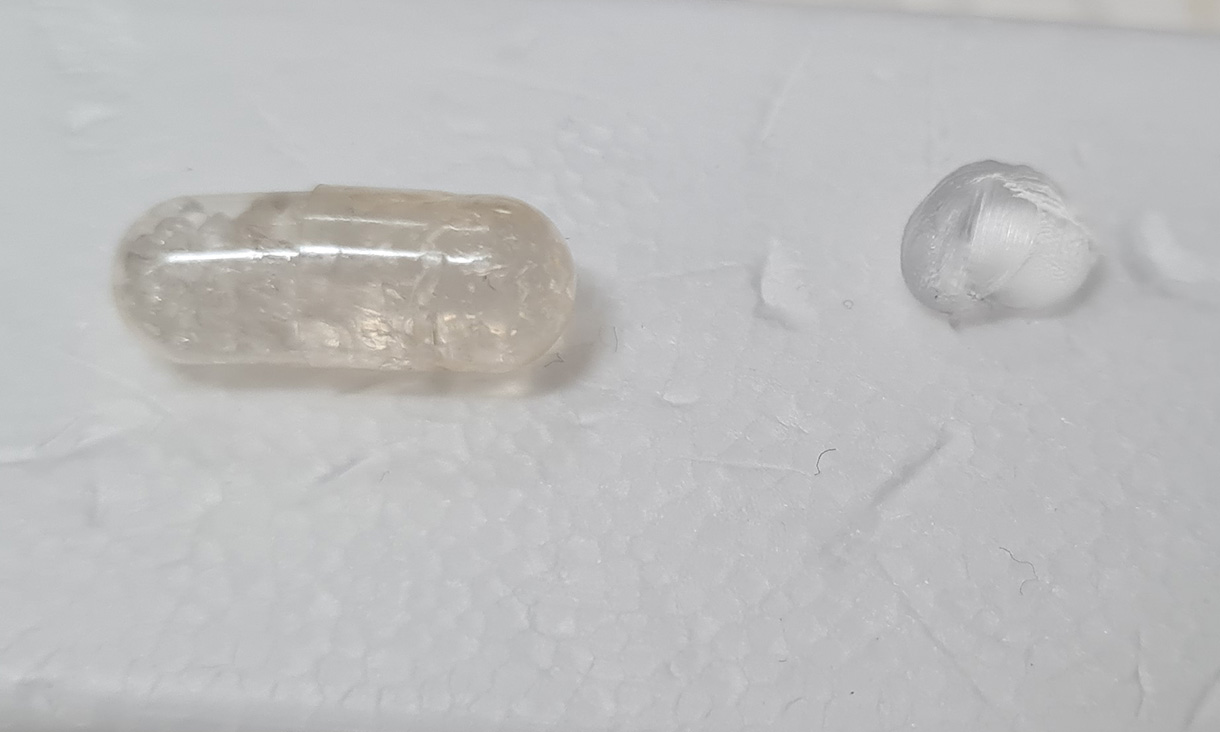 The oral capsule designed by the RMIT team, alongside the fatty nanomaterial filled with insulin that is inside the capsule. Credit: RMIT University
Strong pre-clinical results provide optimism for a new way to deliver insulin
The team has tested the new oral capsule with insulin in a pre-clinical study and the results have been published in the international journal Biomaterials Advances.
“We think the results are really exciting, and we’re doing a suite of pre-clinical testing so we can move to clinical trials as soon as possible,” Conn said.
The research paper assessed the performance of the oral capsules with both fast-acting and slow-acting insulin.
“When controlling the blood-sugar, you need a very fast response if you’re eating a meal. That’s known as fast-acting insulin,” Conn said.
A slow-acting form acts over a much longer timeframe – up to a day or so – to keep the insulin in the body steady. Most diabetics take a combination of both types of insulin.
“We had excellent absorption results for the slow-acting form – about 50% better than injection delivery for the same quantity of insulin,” Conn said.
The capsule achieved good absorption results for fast-acting insulin, but the significant lag in the insulin taking effect compared with injection delivery would likely make it less practical.
“Our results show there is real promise for using these oral capsules for slow-acting insulin, which diabetics could one day take in addition to having fast-acting insulin injections,” Conn said.
“The oral capsules could potentially be designed to allow dosing over specific time periods, similar to injection delivery. We need to investigate this further, develop a way of doing so and undergo rigorous testing as part of future human trials.”
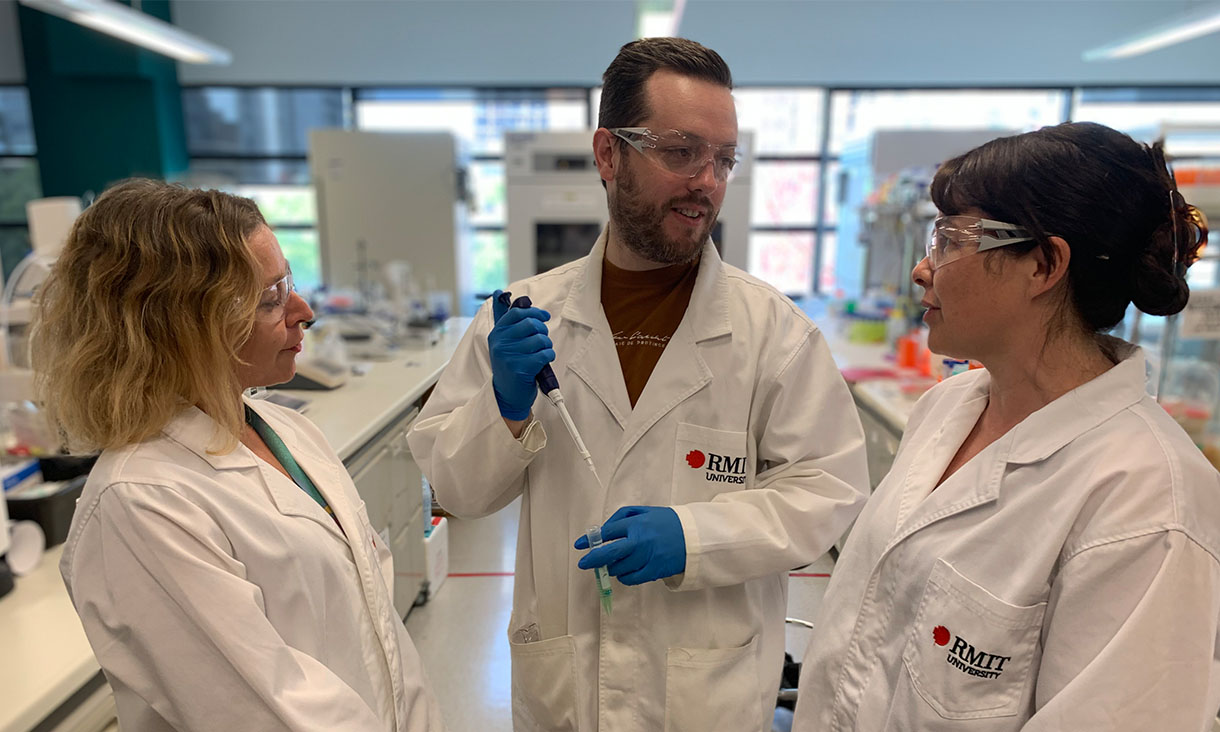 Dr Céline Valéry, Dr Jamie Strachan and Professor Charlotte Conn (left to right) in the RMIT team’s lab. Credit: RMIT University
How does the team’s drug capsule work?
Dr Jamie Strachan, the first author on the paper, said the capsule protected the drug inside so that it passed safely through the stomach to the small intestine.
“The capsule has a special coating designed to not breakdown in the low pH environment of the stomach, before the higher pH levels in the small intestine trigger the capsule to dissolve,” said Strachan, from the School of Science.
“We package the insulin inside a fatty nanomaterial within the capsule that helps camouflage the insulin so that it can cross the intestinal walls.
“It’s actually similar to how the Pfizer and the Moderna COVID vaccines work where the mRNA in those vaccines is also packaged within fats, helping to keep the drugs active and safe during delivery in the body.”
These vaccines contain mRNA, which is similar to DNA, to safely carry the instructions for making a viral protein within the body, activating our immune system.
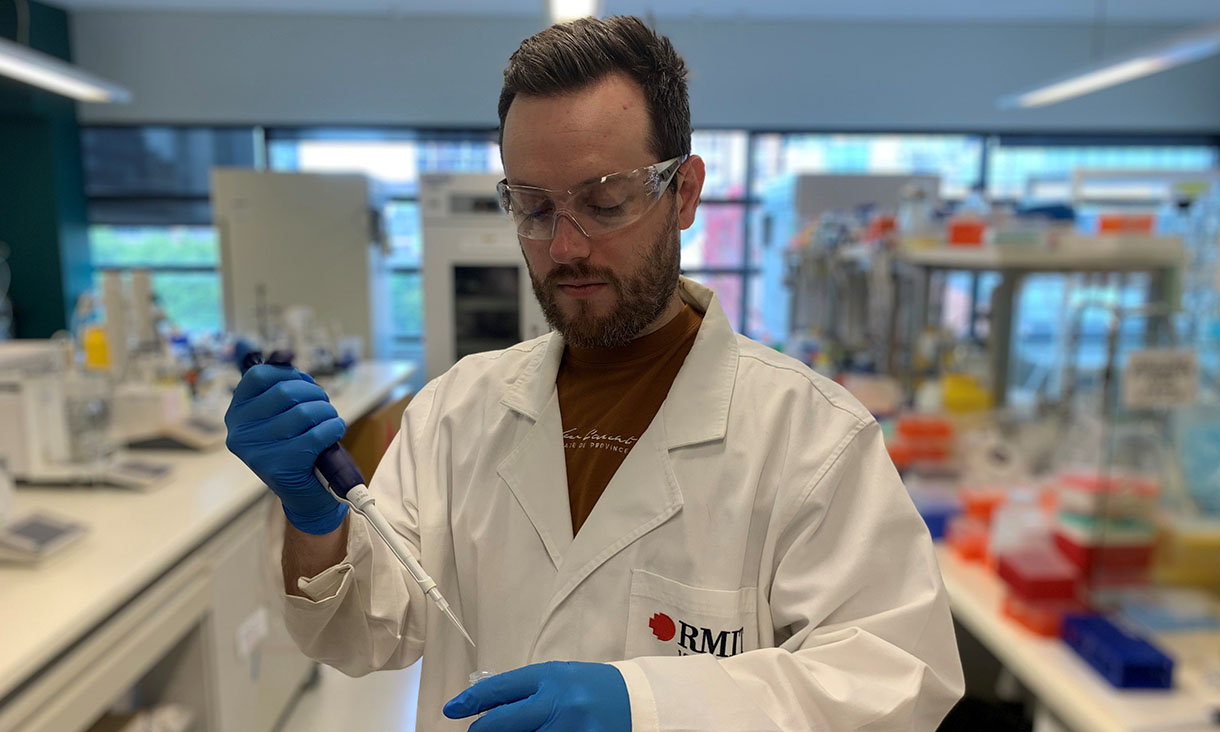 Dr Jamie Strachan in the lab. Credit: RMIT University
A cheaper and more efficient way to deliver protein drugs
Dr Céline Valéry, a pharmaceutical scientist from RMIT and study co-author, said they used the same amount of insulin in the oral capsules and in the injection delivery.
“For many pre-clinical trials the oral formulations by necessity contain much higher levels of insulin to achieve the same response as the injection delivery. This is not a very cost-effective way to deliver protein drugs which tend to be expensive,” said Valéry, from the School of Health and Biomedical Sciences.
“It’s a great starting point but we need to do further trials to develop an alternative, pain-free method for the delivery of insulin and other protein drugs.”
‘A promising new oral delivery mode for insulin using lipid-filled enteric-coated capsules’ is published in Biomaterials Advances (DOI: 10.1016/j.bioadv.2023.213368).
Jamie Strachan, Brendan Dyett, Stanley Chan, Brody McDonald, Ross Vlahos, Céline Valéry and Charlotte Conn are co-authors.