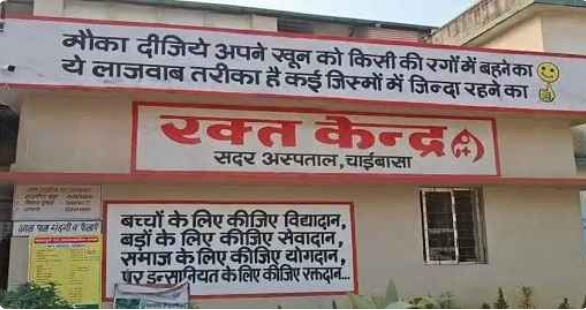
Chaibasa, Jharkhand– Shocking HIV outbreak linked to contaminated blood transfusions at a government-run blood bank in Chaibasa has left five thalassemia-affected children battling the virus, unraveling a web of regulatory negligence that dates back over two decades. Revelations from a 2020 inspection—long buried under bureaucratic inaction—show the facility flouted safety protocols by using cheap rapid test kits for infections despite having advanced ELISA machines at its disposal, prompting a statewide audit of blood banks and high-level suspensions.
The crisis erupted last week when families of regular thalassemia patients at Sadar Hospital in West Singhbhum district raised alarms after routine check-ups revealed HIV-positive results in their children. The youngest victim, a four-year-old boy named Aryan, had received multiple transfusions over the past year. “We trusted the hospital with our son’s life—thalassemia is hard enough without this nightmare,” Aryan’s father, Rajesh Kumar, told reporters outside the hospital, his voice breaking. “Now our landlord has thrown us out, saying we’re a ‘risk’ to others. Where do we go?”
Preliminary investigations confirmed the source: blood units from the Chaibasa blood bank, operated under the hospital. At least five children, all under 12 and dependent on frequent transfusions for their blood disorder, tested positive for HIV following procedures between 2023 and mid-2025. Health officials have since traced three HIV-positive donors among 259 who contributed to the bank’s stock during that period, raising fears of broader exposure.
Unearthed Violations: Rapid Kits Over ELISA, Expired Licenses, and Filth
The scandal’s roots trace to a joint inspection in December 2020 by the Central Drugs Standard Control Organisation (CDSCO) East Zone and Jharkhand’s drug inspectorate, which uncovered a litany of violations at the facility. Despite possessing ELISA machines—gold-standard equipment for detecting HIV, Hepatitis B and C, syphilis, and malaria—the blood bank relied on less accurate rapid kits for screening donations. Inspectors also flagged the use of copper sulfate over proper hemoglobin testing methods, poorly maintained blood stock registers, absence of pollution certificates, and grossly unhygienic conditions: rooms cluttered with junk, non-functional air conditioners in critical areas, and improper disposal of expired or infected blood bags.
Compounding the chaos was the bank’s license, expired since 2012 and never properly renewed despite repeated late applications. It operated illegally for 17 years, shifting locations without fresh approvals while officials sought extensions on the old license. The CDSCO recommended immediate action under the Drugs and Cosmetics Rules 1945 in 2021, but Jharkhand’s state drug controller dismissed the findings, prioritizing license renewals over shutdowns or prosecutions. No penalties followed for the controller, even as the bank continued dispensing potentially lethal blood.
“This was not an isolated lapse but a systemic failure,” said Dr. Suresh Pradhan, the CDSCO drug inspector involved in the 2020 probe. “We handed over evidence of life-endangering shortcuts, yet the state looked the other way. How many more children paid the price?”
Swift Backlash: Suspensions, Probes, and a Statewide Crackdown
The October 25 disclosure—sparked by one family’s complaint—ignited outrage, drawing parallels to past medical scandals like the 2023 Gurugram eye hospital infections. Jharkhand Chief Minister Hemant Soren responded decisively, suspending Civil Surgeon Dr. Dinesh Kumar on October 26 and ordering a high-level inquiry.The Jharkhand High Court intervened the next day, directing a magisterial probe into the transfusions and mandating the blood bank operate only for emergencies while corrective measures are implemented.
Health Minister Irfan Ansari announced a comprehensive audit of all 50+ blood banks in the state, starting October 29, with teams from the health and drugs departments fanning out to verify licenses, testing protocols, and hygiene standards. “Three donors have been identified as HIV-positive, and we’re contacting all recipients from the past two years for re-testing,” Ansari stated in Ranchi. “No stone will be left unturned—this betrayal of trust ends now.”
Affected families, supported by child rights groups like the Globally Integrated Foundation for Thalassaemia (GIFT), have filed FIRs against hospital staff and demanded compensation. GIFT’s director, in a poignant Facebook post, lamented: “We are heartbroken. These children fight daily for survival; now they’re fighting an invisible enemy because of adult negligence.” Protests swelled outside the Chaibasa collectorate on October 30, with parents chanting for justice and stricter oversight.
Broader Implications for India’s Blood Safety Net
This episode underscores gaping holes in India’s blood banking system, where over 80% of the 3,000+ facilities are government-run but chronically under-resourced. The Indian Red Cross Society estimates 12 million units are transfused annually, yet lapses in screening contribute to 1-2% of HIV transmissions via blood—potentially thousands of cases yearly. Experts call for mandatory ELISA adoption nationwide and digital tracking of donor histories to prevent repeats.
As forensic teams analyze seized blood samples and the high court probe gathers steam—expected to report within 30 days—the Minote family and others like them cling to fragile hope. Rajesh Kumar, evicted and isolated, summed up the collective grief: “Our kids didn’t choose this disease. The system did.”
Updates on the investigation and audit results are anticipated next week. Jharkhand health officials urge anyone who received transfusions at Chaibasa since 2023 to seek immediate HIV testing at government centers, available free of charge.