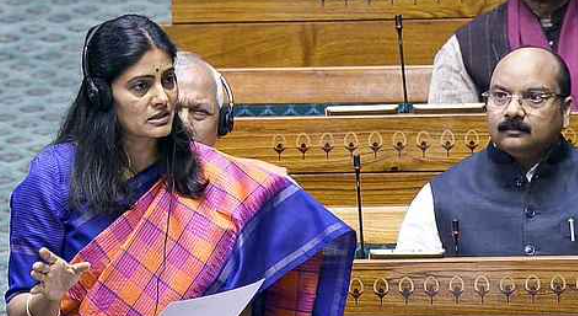
New Delhi— The government has reported robust growth in India’s medical devices industry, with 4,108 licensed manufacturers currently operating across the country and cumulative Foreign Direct Investment (FDI) inflows touching ₹20,658 crore since the financial year 2018-19. These figures were disclosed in a detailed written reply submitted in the Lok Sabha on March 13, 2026, to Unstarred Question No. 3581 raised by Shri Appalanaidu Kalisetti, Member of Parliament, to the Minister of Chemicals and Fertilizers.
According to the reply, the Central Drugs Standard Control Organisation (CDSCO) has licensed a total of 4,108 medical device manufacturers (some units operate across multiple risk classes). The class-wise breakup is:
Class A: 2,099 manufacturers
Class B: 2,560 manufacturers
Class C: 1,123 manufacturers
Class D: 343 manufacturers
Central production data is not maintained, but segment-wise export data shows steady growth — from USD 2,532 million in FY 2020-21 to USD 4,014 million in FY 2024-25. Major segments include consumables & disposables (USD 1,863 million in FY 24-25), electromedical equipment (USD 1,483 million) and implants (USD 350 million).
FDI Surge and Domestic Investment
FDI inflows in the medical devices sector have shown remarkable acceleration:
2018-19: ₹1,108 crore
2019-20: ₹2,196 crore
2020-21: ₹511 crore
2021-22: ₹1,545 crore
2022-23: ₹3,123 crore
2023-24: ₹3,978 crore
2024-25: ₹5,253 crore
2025-26 (up to December 2025): ₹2,944 crore
Cumulative total: ₹20,658 crore
The government noted that domestic investment figures in the sector are not centrally maintained by any ministry.
PLI Scheme Delivers Strong Results
Under the Production Linked Incentive (PLI) Scheme for Promoting Domestic Manufacturing of Medical Devices (budgetary outlay ₹3,420 crore, incentive period FY 2022-23 to FY2026-27), 28 applicants have been approved. Incentives worth ₹157.15 crore have already been disbursed to seven eligible companies till December 2025.
Key outcomes:
24 greenfield projects commissioned
Commercial production started for 57 high-end medical devices (including linear accelerators, MRI, CT scanners, ultrasound, mammograms, C-Arm and X-ray machines) — categories where India was previously heavily import-dependent
Cumulative eligible sales: ₹13,624.52 crore (including exports of ₹6,425.48 crore) till December 2025
Additionally, under the Scheme for Promotion of Medical Devices Parks, three parks have been approved — Greater Noida (Uttar Pradesh), Ujjain (Madhya Pradesh) and Kanchipuram (Tamil Nadu) — with a total project cost exceeding ₹871.11 crore. Central assistance of ₹300 crore (₹100 crore each) has been sanctioned; ₹210 crore has already been released as grant-in-aid.
Major Push for R&D, Quality Certification and MSME Participation
To strengthen self-reliance (Atmanirbhar Bharat), the government has implemented several targeted initiatives:
1. National Medical Devices Policy, 2023 — Provides a comprehensive framework for sector growth with a patient-centric approach.
2. Promotion of Research and Innovation in Pharma MedTech Sector (PRIP) Scheme (outlay ₹5,000 crore):
Seven Centres of Excellence (CoEs) established at NIPERs, with ₹700 crore budgetary support for research infrastructure.
Dedicated CoE at NIPER Ahmedabad specialising in medical devices.
₹4,200 crore earmarked for R&D projects of industry, start-ups and MSMEs in priority areas.
3. Scheme for Strengthening Medical Device Industry(outlay ₹500 crore):
Financial support for manufacturing of key components & accessories, skill development, clinical studies and industry promotion.
Under the Common Facilities for Medical Devices Clusters sub-scheme: up to ₹20 crore for common infrastructure and up to ₹5 crore for testing facilities to enhance quality certification (BIS/ISO standards).
These measures specifically promote MSME participation through direct financial assistance for R&D projects, common testing labs and cluster infrastructure. The government has also pursued regulatory streamlining and enabling infrastructure in six focus areas to attract further investment and improve quality certification ecosystem.
The reply also clarified that no central data is maintained on the self-reliance ratio for critical devices such as diagnostic kits, ventilators, stents and implants; however, the PLI and Parks schemes are explicitly designed to reduce import dependence (which stood at over 85% of the market in 2020). No proposal for new medical device clusters or technology platforms was mentioned in the current reply.
This comprehensive update underscores the Centre’s multi-pronged strategy to position India as a global hub for medical devices manufacturing, with significant emphasis on innovation, quality infrastructure and inclusive growth through MSMEs. Further progress reports are expected as the PLI incentive period continues till FY2026-27.