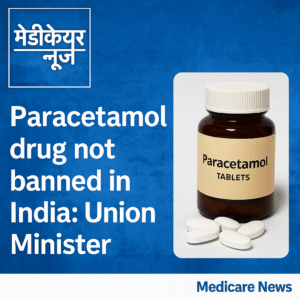
In a firm clarification during the Monsoon Session of Parliament, Union Minister of State for Chemicals and Fertilisers Anupriya Patel confirmed that the government has not banned the commonly used pain-relief drug paracetamol in India. This statement comes amidst confusion and public concern over the drug’s regulatory status.
No Ban on Paracetamol, Clarifies CDSCO
Patel stated that thehttp://Central Drugs Standard Control Organisation Central Drugs Standard Control Organisation (CDSCO) has not received any notification or initiated any ban on paracetamol in India. She emphasized that there is no regulatory decision to halt its use, debunking social media claims about its prohibition.
Ban on Some Drug Combinations Only
However, the minister did clarify that while paracetamol alone is not banned, certain Fixed Dose Combinations (FDCs) that include paracetamol with other ingredients have been banned for safety reasons. These bans are based on rigorous clinical assessments and aim to prevent irrational combinations that may harm public health.
Free Essential Drug Services Under NHM
In a proactive move to reduce out-of-pocket medical expenses for Indian families, the government has launched a Free Drugs Service Initiative under the National Health Mission (NHM). This ensures free access to essential medicines in government hospitals and rural health facilities across states.
Financial Support for State Procurement
Patel shared that financial assistance is being given to states to procure drugs, improve warehousing, implement quality assurance, and maintain transparent supply chains. The Ministry also promotes use of the Drugs and Vaccine Distribution Management System (DVDMS) — a tech platform that tracks availability and distribution of essential medicines in real-time.
Facility-wise Drug List to Improve Access
To streamline drug availability, the Ministry of Health has recommended facility-specific Essential Medicines Lists (EMLs). For example:
106 drugs for Sub-Health Centres
172 for Primary Health Centres
300+ for District Hospitals
States are allowed to add more drugs as per local needs, yet accountable framework.